What Does Ayahuasca Feel Like? Night 1 Vs Night 4
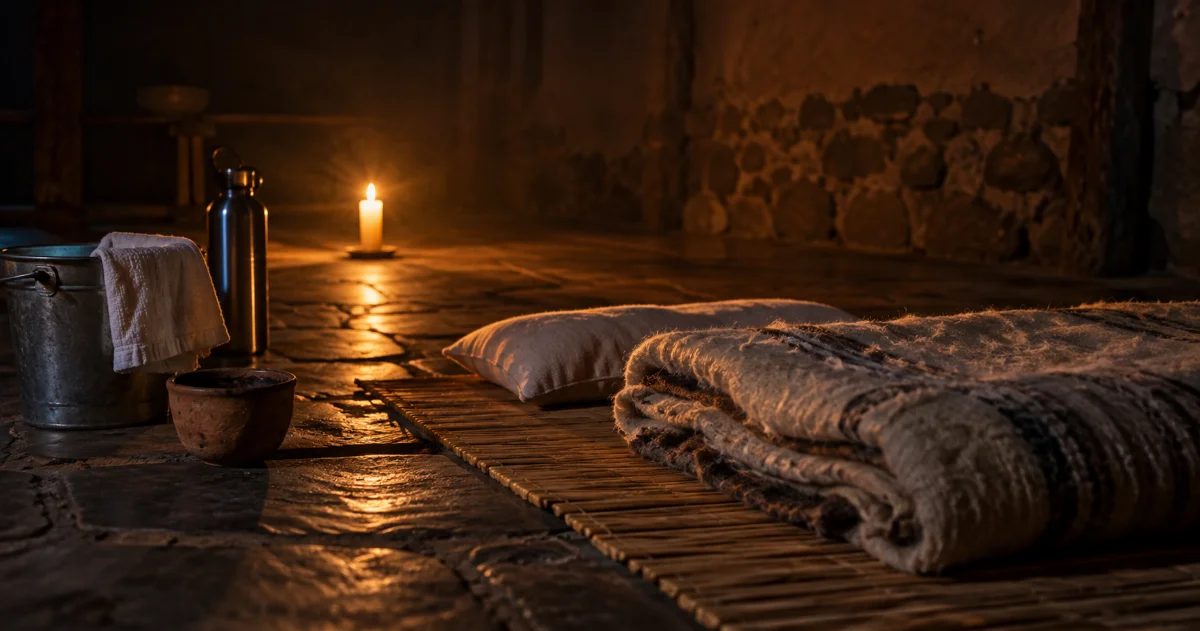
“What does ayahuasca feel like?” gets a different answer on each night of a retreat. Across 9 years and roughly 2,000 guests at our ayahuasca retreats in Cusco, night 1 is often quiet or mostly physical: nausea, a purge, the cold and a long wait in the dark. The emotional work tends to come later. In the guest stories we remember best, it arrived on the 3rd ceremony. And on any night, part of what you feel isn’t the medicine. It’s the waiting, the cold and, at 2,900 metres, the altitude.
Ayahuasca feels like a long night of strong, mixed sensations. Nausea comes first for most people, and vomiting is common. With eyes closed, people often see vivid images or relive memories as scenes, and they swing between fear and calm. Effects peak about 1.5 to 2 hours after drinking, and they change from 1 night to the next.
What the brew causes, and what the room causes
The brew reliably causes nausea and vomiting. Anxiety and headache are a different matter: in a placebo-controlled trial, people who drank a fake brew reported them at least as often.
In 2019, Palhano-Fontes and colleagues gave 29 patients with treatment-resistant depression either ayahuasca or a brown, bitter placebo made to copy its taste and colour. Their paper in Psychological Medicine reported side effects for both groups.
| Effect | Ayahuasca (14 patients) | Placebo (15 patients) | Clear difference? |
|---|---|---|---|
| Vomiting | 57% | 0% | Yes |
| Nausea | 71% | 26% | Yes |
| Restlessness | 50% | 20% | No |
| Anxiety | 50% | 73% | No |
| Headache | 42% | 53% | No |
Only vomiting and nausea separated clearly from the placebo. It’s 1 small trial of 29 patients with treatment-resistant depression, so don’t read those percentages as your odds. The direction is worth knowing, though. In that trial, anxiety was at least as common on the fake brew. So some of the fear you feel on the mat may come from the room and the wait.
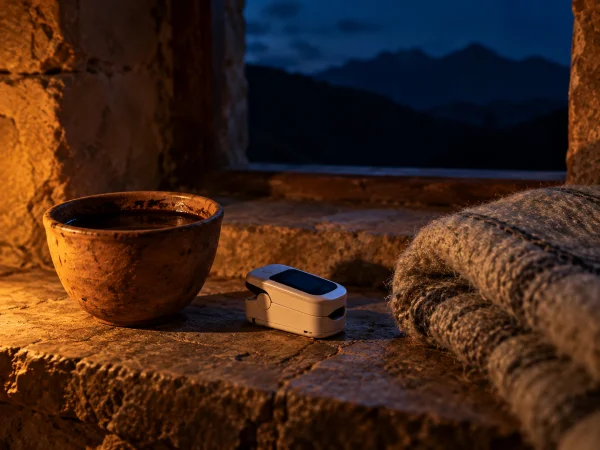
Up here there’s a 3rd source. Altitude sickness brings its own headache and nausea, and it usually hits in the first 2 days after you arrive.
What does ayahuasca feel like in your body?
Mostly like nausea, then release. In the Global Ayahuasca Survey of 8,216 drinkers, 62.0% reported vomiting or nausea during or soon after a ceremony.
That survey, published by Bouso and colleagues in PLOS Global Public Health in 2022, lists what else people reported. Headache was reported by 17.8%, abdominal pain by 12.8%, aching muscles by 7.5% and breathing difficulties by 7.3%. Only 2.3% of those who answered said they needed medical attention afterward.
It starts with the first cup: thick and bitter, and for some people the smell is harder than the taste. The purge usually comes in the first half of the night and runs 30 to 90 minutes. It gets less intense with each ceremony, and guests describe it as the most cathartic vomiting they’ve ever had.
Then there’s the cold. Our ceremony nights run 2 to 10°C, so you lie on a mat under thick alpaca blankets, and guests tell us the cold keeps them alert. Women sometimes ask whether being on your period changes the physical side. The medicine doesn’t change. Iron levels and cramping in the cold do.
What goes on in your head
Your attention turns inward. In a 2003 placebo-controlled trial in the Journal of Pharmacology and Experimental Therapeutics, Riba and colleagues found effects “peaking between 1.5 and 2 h, involving perceptual modifications and increases in ratings of positive mood and activation.”
With your eyes closed, that often means images, colours or memories that play like scenes rather than thoughts. The pictures matter less than first-timers expect, and we’ve set out what the visions mean in a separate post. Our guests’ “I wish someone had told me” list includes this one: nothing might happen on the first night.
Emotion is the other half, and it rarely arrives in order. Crying can come with no story attached, and laughter can follow soon after. On her 3rd night, 1 guest made a sound between laughing and sobbing that went on for 20 minutes.
Night 1 vs night 4
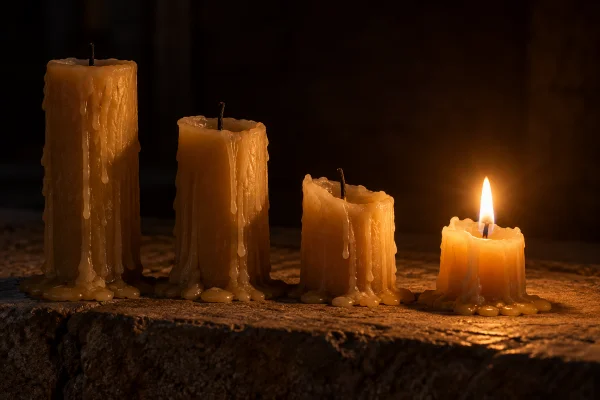
In our experience, night 1 is the most physical of the 4. The emotional work tends to come later, and the purge eases each time.
We hold 4 ceremonies, on nights 4, 6, 9 and 11 of the retreat format we settled on in 2018, when altitude taught us to wait. This is the pattern we see across them.
| Ceremony | What changes | What guests most often feel |
|---|---|---|
| 1st (night 4) | A low first dose, typically 40 to 60 ml. Onset runs 15 to 20 minutes slower at this altitude | Nausea and, for some, the heaviest purge of the week. A long wait. Some feel almost nothing |
| 2nd (night 6) | Don Julio adjusts the dose to how night 1 went | The routine feels known, and the purge is usually less intense |
| 3rd (night 9) | Comes after a 2-day break | In 3 of the guest stories we remember best, this was the night that opened up after 2 quiet or physical ones |
| 4th (night 11) | The last night, after a 2nd one-to-one with the healers | Usually the lightest purge. The room knows each other, and someone usually laughs |
It’s a pattern, and your nights may run in a different order.
The first dose is kept low on purpose. Don Julio puts it this way: “The first night is for the vine to meet the person.” Around 10:30 pm he offers a second cup, and he turns down roughly 20% of requests. A 2012 double-blind trial in Psychopharmacology shows what a second dose adds. When 9 experienced volunteers took 2 doses 4 hours apart, their blood DMT levels and their ratings of the effects came out higher than after a single dose, with no clear sign of tolerance. Our gap is about 1.5 hours, so treat that as a direction rather than a match. If you want the clock itself, we’ve broken down how long it lasts hour by hour.
2 first ceremonies, 2 months apart
I’ve felt both ends of this. My first 2 ceremonies, in 2014, used the same medicine and felt nothing alike.
The first was in March 2014, in a rented farmhouse near Lamay. I found 8 strangers on blankets on a concrete floor and 1 candle. A man whose last name I never learned poured everyone the same amount from a plastic bottle. There was no screening and no doctor. I purged hard for 3 hours, relived my father’s funeral in detail, and spent 2 hours convinced I was dying. Nobody checked on me.
2 months later, an anthropologist I’d met in Cusco told me I’d drunk with someone who shouldn’t have been serving, and she sent me to Don Julio’s house outside Chinchero. It was a small adobe room with a packed-earth floor and 1 candle. He sang to me for 5 hours. For the first time in a decade, the noise in my head went quiet. Not the scotch kind of quiet.
I can’t separate the dose from the room in my own story. I can tell you what differed: the first time, nobody checked on me, and the second time, someone sang to me for 5 hours. That’s why, 9 years into running this place, someone is within arm’s reach of every guest at every moment of every ceremony, and why you can read about our maestros and doctor before you book.
What does a frightening night feel like?
Usually like fear with nothing to attach it to: a pounding heart and a strong sense that the night won’t end. It’s temporary, and nobody here faces it alone in the dark.
When it happens, the 2 am protocol starts. A facilitator makes verbal contact first, touch comes only with your consent, and a healer comes to sing at your mat. If you’re hyperventilating, the first thing Dr. Medina checks is your oxygen saturation, because at this altitude low oxygen can look like panic.
Across 9 years and roughly 2,000 guests, Dr. Medina has assessed a guest mid-ceremony for heart rate, panic or dissociation 6 to 8 times. Guests needed supplemental oxygen 10 to 12 times during the acclimatisation days.
What predicts a hard ceremony?
How you arrive matters. In a 2018 prospective study of 654 people planning a psychedelic session, published in Frontiers in Pharmacology, a positive and prepared mindset going in lowered the odds of a challenging experience.
The same study, by Haijen and colleagues, found that higher doses and a trait called absorption, a tendency to become fully immersed in experiences, raised the odds of both mystical-type experiences and challenging ones. Only 11.1% of that sample took ayahuasca, so read it as evidence about psychedelics in general.
Our own observation points the same way. After 2,000 guests, the ones who struggle most tend to be the most rigid: tight control, strong defences, everything turned into analysis. The guests who do best arrive willing to be surprised. We have a line for it here: willingness beats diagnosis. It’s why Patricia Rojas, our senior facilitator, asks every applicant on their video call: “Tell me about the worst psychological experience you have ever had, and what helped you come out of it.”
What altitude adds, heart included
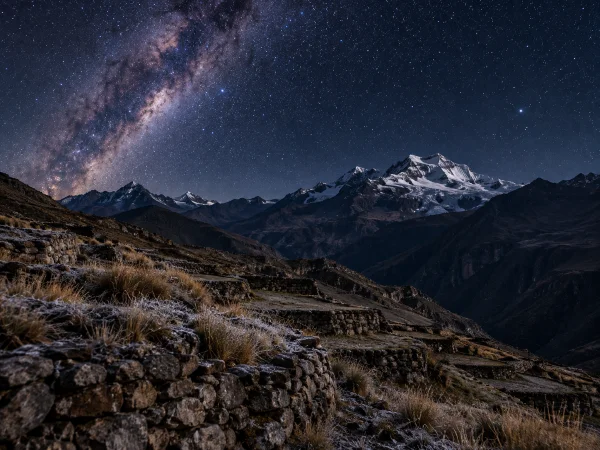
At our elevation, altitude sickness can feel close to ayahuasca’s side effects. The CDC describes its symptoms as like an alcohol hangover: a headache plus dizziness, fatigue, loss of appetite, nausea or, occasionally, vomiting.
It usually starts 2 to 12 hours after arrival, often during or after the first night. The CDC’s own example: 25% of visitors sleeping above 8,000 feet in Colorado get it. In Cusco, a 2022 Journal of Travel Medicine study of 142 young travellers, median age 21, found 39% had it within 48 hours. That’s why our first ceremony is on night 4, after 2 full acclimatisation days. Dr. Medina is certified in altitude medicine. He tracks oxygen levels through those days and can tell the mountain’s symptoms from the medicine’s in ceremony.
Ayahuasca also adds some load to your heart. In the 2003 trial, diastolic blood pressure rose 9 mm Hg at the higher dose, while heart rate and systolic pressure rose moderately, not enough to count as a clear change. In the survey of 8,216 drinkers, 4.7% reported chest pains. Our physician treats altitude as added cardiac risk, which is why uncontrolled heart conditions and uncontrolled high blood pressure are on the list of who we turn away.
How do you feel in the days after?
Tired, at first. Most guests sleep until 9 to 11 the morning after, and the next days bring vivid dreams and emotions that keep surfacing.
Harder feelings, if they come, tend to show up in the following weeks. In the Global Ayahuasca Survey, more than half of respondents reported at least 1 difficult mental health effect in the weeks or months after drinking. Hearing or seeing things other people didn’t came top at 28.5%, followed by feeling disconnected or alone (21.0%), nightmares or disturbing thoughts (19.2%) and feeling nervous or anxious (18.9%). 11.9% of those affected said they needed professional support, and around 88% saw the effects as part of a positive process of growth or integration.
Guests put this on their “I wish someone had told me” list too: coming home is harder than going. Then come the practical questions, like when you can drink again. The usual 2-week rule has less behind it than you’d think.
Our own numbers sit alongside the depression research rather than replacing it. Across roughly 310 guests with complete 3-month follow-up since 2020, average PHQ-9 depression scores fell from 12.1 at intake to 6.3 at 3 months, and 29% showed no meaningful improvement. That’s observational data from people who chose to come, with no control group.
Before your first ceremony in 2026
Expect night 1 to be the most physical night and often the quietest in your head, and don’t judge the week by it.
Arrive a day early, eat plainly for 2 weeks, tell the truth on your intake form, and pack more warm socks than you think you need. The short answer to “what does ayahuasca feel like” is that night 4 feels different from night 1, and some of what you feel comes from the room rather than the cup. If you’d like Dr. Medina to look at your history first, start your application. He reviews every form within 72 hours.
Frequently asked questions
What does ayahuasca feel like the first time?
Often quieter than people expect, and mostly physical: nausea, a purge and a long wait in the dark. First-night doses here are kept low on purpose, typically 40 to 60 ml. Some guests feel almost nothing on night 1, and that’s no guide to the nights after it.
Does everyone vomit on ayahuasca?
No, but nausea and vomiting are the most common physical effects. In a 2019 placebo-controlled trial, 57% of patients vomited on ayahuasca and none did on placebo. In the Global Ayahuasca Survey, 62.0% of 8,216 drinkers reported vomiting or nausea.
Does ayahuasca feel different on the 2nd, 3rd and 4th night?
Yes. The first dose is kept low, the purge eases each time, and the emotional work tends to arrive later. Our 4 ceremonies fall on nights 4, 6, 9 and 11, with a 2-day break before the 3rd.
What if you feel nothing on ayahuasca?
It’s common on the first night, especially with a deliberately low first dose. Don Julio’s reading is that the vine is still learning you, and some of the strongest 3rd and 4th nights we’ve seen followed a quiet start. Tell a facilitator if night 2 is quiet too, because the dose can change.
Is ayahuasca hard on the heart?
It adds some load. In a 2003 placebo-controlled trial, diastolic blood pressure rose 9 mm Hg at the higher dose, while heart rate rose only moderately. Our physician treats altitude as added cardiac risk, so uncontrolled heart conditions and uncontrolled high blood pressure rule you out here.
What does ayahuasca feel like at high altitude?
Colder, and harder to read at first. Altitude sickness brings its own headache, nausea and fatigue, and in a 2022 study, 39% of 142 travellers in Cusco had it within 48 hours of arriving. Onset here also runs 15 to 20 minutes slower than at sea level.
How do you feel the day after ayahuasca?
Tired, and often raw. Most guests sleep until 9 to 11 the next morning, and vivid dreams and resurfacing emotions are common for days. In the Global Ayahuasca Survey, 11.9% of people with difficult effects afterward said they needed professional support, and around 88% saw those effects as part of a positive process.