Alcohol After Ayahuasca: Hours, Not Weeks
Ask 10 retreats when you can drink alcohol after ayahuasca and 9 will tell you 2 weeks. Almost none of them will tell you where that number came from. I run a retreat house in Cusco with Shipibo maestros in Cusco, and I went looking for the source. It appears to be borrowed from prescription MAOI practice. Ayahuasca’s MAO inhibitor doesn’t behave like those drugs at all. The drug interaction window closes in hours. The case for staying dry a fortnight is real, but it isn’t chemical. Both answers are below with their sources, plus a third one that only applies if your ceremony happened at 11,150 feet.
How long after ayahuasca can you drink alcohol?
The interaction risk and the integration question have 2 different answers, and the field keeps giving you one number for both.
The MAO inhibitor in ayahuasca is harmine. It’s a reversible inhibitor, and its measured plasma half-life in healthy volunteers is 80.8 to 93.2 minutes. After roughly 8 hours, most of it is gone and the enzyme is working normally again. That’s the pharmacology. The 2-week rule most retreats give you is about protecting what you learned, not about a drug interaction.
That paragraph is the answer. The rest of this page is why it’s true, what it doesn’t excuse, and the part nobody outside Cusco has to think about.
Our doctor is on site through all 7 nights and stays awake through every ceremony, so I’ve watched a physician field this exact question at 3am more times than I can count. The answer she gives is not the answer on most retreat websites.
The 2-week rule was borrowed from a different class of drug
Prescription MAOIs and ayahuasca’s beta-carbolines are not the same kind of molecule, and the washout advice doesn’t carry across.
Phenelzine and tranylcypromine bind to monoamine oxidase and don’t let go. Your body has to build new enzyme from scratch, which takes about a fortnight. That’s why psychiatrists insist on a 2-week gap before and after those drugs.
Harmine works differently. A 2020 review in the Brazilian Journal of Psychiatry by Ruffell and colleagues states that beta-carbolines are reversible inhibitors of MAO-A. Reversible means it lets go. Add the half-life measured by Egger and colleagues in a 2025 factorial dose-escalation study in Biomedicine and Pharmacotherapy, 80.8 to 93.2 minutes, and the enzyme is back online the same night.
| What you’re asking | How long | What it’s based on |
|---|---|---|
| Is there still a drug interaction? | About 8 hours | Harmine half-life, 80.8 to 93.2 min, reversible MAO-A inhibition |
| Should I drink at altitude? | 48 hours minimum from arrival | CDC Yellow Book, 2026 edition |
| Should I drink at all yet? | Weeks to months, your call | Integration, not chemistry |
Somebody copied the psychiatric washout period onto a retreat prep sheet, and the industry repeated it for 20 years without checking. It’s a reasonable rule arrived at for the wrong reason. Which matters, because a rule with a fake explanation is a rule people break the moment they notice the explanation is fake.
You should still not drink the night after a ceremony. Keep reading for the reasons that hold up.
Which drinks actually carry a tyramine risk?
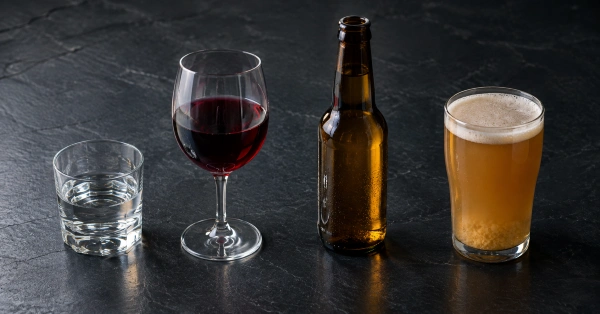
Distilled spirits are the lowest-risk category, not the highest. A lot of retreat blogs have this exactly backwards.
Tyramine is what makes MAOIs dangerous with certain foods and drinks. It builds up during fermentation. Combine enough of it with an active MAO inhibitor and you can get a hypertensive crisis, meaning blood pressure spiking up. I’ve read retreat pages warning that alcohol plus MAOIs causes a sudden drop in blood pressure and fainting. That’s the wrong direction, and the two emergencies need opposite responses.
Queensland Health’s clinical guidance for patients on MAOIs lists spirits, wine and bottled beer as permitted, capped at 2 standard drinks a day. What’s restricted is unpasteurised beer, boutique and artisan beer with visible sediment, and home-made beer or wine. Their wording: “Almost all modern bottle and draught beer is safe. However, some beers produced using non-standard fermentation processes can contain high amounts of tyramine.”
Distillation strips tyramine out. So the craft IPA with yeast in the bottom carries more risk than the gin. If you’ve been told otherwise, you were told wrong.
None of this is permission. It’s the correct version of a warning the field has been mangling, and you deserve the correct version.
What 11,150 feet changes in 2026
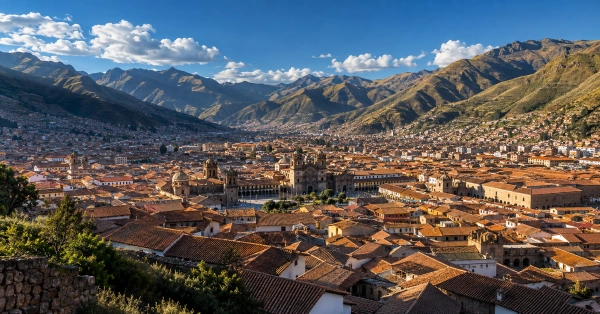
Cusco sits at 11,150 feet, and altitude adds a rule that has nothing to do with ayahuasca and applies to every visitor in the city.
The CDC Yellow Book, 2026 edition, tells travellers to avoid alcohol for the first 48 hours at high altitude. It also says respiratory depressants such as alcohol and opiates should not be used to aid sleep up here. Alcohol suppresses breathing. At 11,150 feet your blood oxygen is already lower than it is at home, and your breathing during sleep is already unstable.
This is why we hold 2 acclimatisation days before the first ceremony rather than starting on night one. Guests sometimes read that as padding. It isn’t. It’s the same 48 hours the CDC names, and a guest who lands in Cusco, goes out for pisco sours, and sits in ceremony 2 nights later has stacked altitude, dehydration and poor sleep before the medicine arrives.
Every other page competing for this query is written from the Amazon basin, a few hundred feet above sea level. The altitude layer doesn’t exist for them. It’s most of the practical answer here.
Does ayahuasca stop the wanting?
Less reliably than this industry likes to claim, and the honest version of the evidence is more useful than the marketing version.
Here’s what the naturalistic data shows. Perkins and colleagues published a longitudinal study in Frontiers in Pharmacology in 2022 following 53 ayahuasca-naive participants, with alcohol data on 34 of them. At 1 month, ASSIST alcohol scores dropped from 9.76 to 8.26, p=0.001. How often people drank went down, p=0.001. But the average number of drinks per occasion didn’t move at all, and the drop in binge episodes missed significance at p=0.096.
Then there’s the bigger picture. Lawn and colleagues surveyed 96,901 people for a 2017 paper in Scientific Reports, including 527 who’d used ayahuasca in the past year. Their mean AUDIT score was 9.41. The hazardous drinking cutoff is 8. Past-year ayahuasca users scored above the hazardous drinking cutoff, and higher than the respondents who used neither ayahuasca nor other psychedelics, who came in at 8.45.
Read those two together and you get something more interesting than “ayahuasca ends your drinking.” People seem to drink less often afterwards. They don’t automatically drink less when they do drink. And ayahuasca drinkers as a group are not a sober population.
I’ve sat with guests who stopped completely after one week and never went back. I’ve also had guests email me 8 months later to say the change faded around month 3. Both happen. A retreat that only tells you about the first kind is selling you something. If mood and mental health outcomes are your reason for coming, what the research shows on depression is a better-evidenced place to set your expectations than the drinking stories.
Drinking between ceremonies, during the 7 nights
No. Not for a chemistry reason, for a scheduling one.
We run 4 ceremonies across 7 nights with 12 guests maximum. There’s roughly 36 to 48 hours between sittings. The harmine from Tuesday is long gone by Thursday, and how long a ceremony lasts is a different question from how long the compound stays active. So that isn’t the issue. The issue is that the maestros are reading each guest across the whole week and adjusting, and a guest who drank on the off-night arrives at the next ceremony dehydrated, under-slept and chemically different from the person they read on Tuesday.
There’s also the purge. Around 62% of people in the largest survey of ayahuasca users reported vomiting or nausea during a session, and adding alcohol the day before to a body that’s already going to be doing that is a decision nobody has ever been glad they made.
Worth separating from the pre-ceremony diet, which is a different question with a different answer. Our physician’s guidance on medication clean window covers what has to be out of your system before you arrive, and alcohol timing before a ceremony is not the same conversation as alcohol timing after one.
What your drinking history does to your application
It gets read by a physician, and for some people it’s why they’re declined.
Dr. Elena Marquez reviews every application before anyone pays us anything. Roughly 1 applicant in 5 is turned down. Everybody declined gets the reason in writing, and nobody declined is ever charged. That ratio is unusual in this industry, and it’s the single number I’d ask any retreat for before booking.
Heavy current drinking is a screening input, not an automatic no. What matters is where you are right now. Active heavy use, withdrawal risk, and liver function all sit inside a medical decision that belongs to her, not to me and not to a booking form. I’m the founder. I’m not a shaman, healer or facilitator, I don’t serve medicine, and I don’t sit in ceremony. Medical calls here are hers alone.
If you’re coming specifically because drinking has become a problem, say so on the application. The people who hide it are the ones who end up in trouble, and a physician who knows what she’s screening for can build around the truth.
The answer nobody in this field gives you
Most retreat pages hand you a number and skip the reasoning, and the reasoning is what you actually need.
So: the drug interaction is over in about 8 hours. The altitude rule runs 48 hours from arrival. And the integration argument, the one that justifies weeks rather than hours, rests on something the research above supports better than any chemistry claim does. The window where people drink less often is real and it’s measurable. It also appears to be a window rather than a switch. What you do inside it decides whether anything sticks.
That’s why our support runs 12 months rather than ending at the airport. A 2-week rule you follow because a website told you to is a countdown. 12 months with someone to talk to is a different structure, and picking up a glass in month 4 becomes a conversation instead of a failure.
There’s one more figure worth holding. In the Global Ayahuasca Survey of 8,216 people, published by Bouso and colleagues in PLOS Global Public Health in 2022, 55.4% reported some adverse mental health effect in the weeks or months afterward. Of those, 87.6% considered it part of a positive process of growth. So if you drink in that stretch, you’re drinking into a period where difficult material is still moving. Alcohol is a depressant and it blunts exactly the processing that makes the difficult stretch worth something.
Drink or don’t. But know which of the 3 windows you’re in, and don’t let anyone tell you the first one lasts 2 weeks. If you’re weighing a retreat and want a straight answer about alcohol after ayahuasca in your own situation, talk to the physician first, before you book anything.
Frequently asked questions
How long after ayahuasca can you drink alcohol?
The drug interaction window closes in roughly 8 hours, since harmine is a reversible MAO-A inhibitor with a plasma half-life of 80.8 to 93.2 minutes. The 2-week rule most retreats quote is about protecting your integration, not about a chemical interaction. If your ceremony was at altitude, the CDC’s 48-hour rule applies on top of both.
Is alcohol after ayahuasca dangerous?
Not in the way most retreat sites describe it. The tyramine and MAOI combination can cause a hypertensive crisis, meaning blood pressure spiking upward, not the sudden drop several pages claim. The practical risks the night after a ceremony are dehydration, disrupted sleep and blunted processing rather than an acute drug interaction.
How long do the MAO inhibitors in ayahuasca last?
Harmine’s measured plasma half-life in healthy volunteers is 80.8 to 93.2 minutes, per a 2025 study in Biomedicine and Pharmacotherapy. Because beta-carbolines inhibit MAO-A reversibly, the enzyme returns to normal function as the compound clears, usually within about 8 hours. Prescription MAOIs are irreversible, which is why those need roughly 2 weeks.
Which alcoholic drinks are risky with MAOIs?
Unpasteurised beer, boutique and artisan beer with visible sediment, and home-made beer or wine carry the highest tyramine load. Queensland Health’s clinical guidance lists spirits, red and white wine, fortified wine and standard bottled or canned beer as permitted at up to 2 standard drinks a day. Distillation removes tyramine, so spirits are the lowest-risk category.
Does ayahuasca cure alcohol addiction?
No, and the evidence is more mixed than the industry suggests. A 2022 Frontiers in Pharmacology study found drinking frequency fell at 1 month, p=0.001, but the average number of drinks per occasion didn’t change. A 2017 survey of 96,901 people found past-year ayahuasca users averaged an AUDIT score of 9.41, above the hazardous drinking cutoff of 8.
Can you drink alcohol after ayahuasca at high altitude?
Altitude adds a separate restriction. The CDC Yellow Book, 2026 edition, advises avoiding alcohol for the first 48 hours at high altitude and warns against using alcohol to aid sleep there, because it suppresses breathing. Cusco sits at 11,150 feet, so this applies to every visitor regardless of whether they’ve sat in ceremony.
Will my drinking history stop me joining a retreat?
It might, and you’ll be told why. Our physician reads every application before any payment is taken, and roughly 1 applicant in 5 is declined with the reason given in writing and no charge. Heavy current drinking is a screening input rather than an automatic refusal, and hiding it is the thing that creates real risk.