Ayahuasca And Depression: What The Research Actually Says
Ayahuasca has not been shown to treat depression. As of August 2026, the strongest evidence is 1 randomized controlled trial with 29 patients, and the observational study most retreat websites quote cannot support a causal claim at all. That study, published in Scientific Reports in March 2020, followed 40 people in Spain through their first ayahuasca ceremony. It found something worth knowing: 45% of them already met diagnostic criteria for a psychiatric disorder before they drank anything. We read the paper line by line and recomputed its statistics. We found 4 errors, including 2 reported effect sizes that do not match the study’s own test numbers. Here is what this research holds up to, and what it does not.
What Does the Research on Ayahuasca and Depression Show?
Research on ayahuasca and depression consists of 1 small randomized controlled trial, several open-label studies, and a larger body of uncontrolled observational work. The controlled trial, published in Psychological Medicine in 2019, tested 29 patients with treatment-resistant depression. Everything else lacks a control group, so it can describe change over time but cannot prove ayahuasca caused it.
That distinction decides what anyone is allowed to tell you. A study without a control group cannot separate the medicine from everything else happening to a person who flew to Peru, stopped drinking, left their job behind for a week and expected to feel better. All of those move a depression score.
The Study Everyone Quotes, and What It Measured
The 2020 Scientific Reports paper is 2 studies stapled together, and neither one is a trial.
In the first, researchers assessed 40 Spanish adults before their first ayahuasca ceremony, then again at 1 month and 6 months, using the MINI diagnostic interview plus 7 questionnaires. In the second, they compared those same baseline scores against 23 long-term drinkers who averaged 70 ceremonies each. The numbers people quote come from the first one.
| What was measured | Result | When |
|---|---|---|
| Met criteria for 1 or more psychiatric disorders | 18 of 40 (45%) | Before the first ceremony |
| Most common diagnoses | Generalized anxiety disorder (6), substance abuse or dependence (5) | Before the first ceremony |
| No longer met criteria for any disorder | 11 of 18 (61%) | 1 month |
| Met criteria for fewer disorders than at baseline | 4 of 18 (22.2%) | 1 month |
| Developed a new diagnosis after drinking | 1 of 40, still present at 6 months | 1 and 6 months |
| Still enrolled in the study | 15 of 40 | 6 months |
Read the last row again. By the 6-month follow-up, 25 of the original 40 were gone. Of the 18 people who met diagnostic criteria at the start, only 8 were interviewed at 6 months. Everything the paper says about the 6-month mark rests on those 8.
Four Errors We Found in the Most-Cited Ayahuasca Study
We recomputed the paper’s statistics from its own reported numbers. Four things do not hold up.
First, the paper contradicts its own significance threshold. Its methods state that “P values under 0.001 were considered statistically significant.” Its results then call p = 0.03, p = 0.02 and p = 0.007 statistically significant. The headline comparison, showing long-term drinkers with lower depression scores than beginners, sits at p = 0.03. It fails the paper’s own test.
Second, 2 of the reported effect sizes do not match their own test statistics. Cohen’s d for a 2-group comparison is the t value multiplied by the square root of (1/n1 + 1/n2). With 40 people in one group and 23 in the other, that multiplier is 0.262.
| Measure | t value in the paper | Cohen’s d reported | Cohen’s d recomputed |
|---|---|---|---|
| Depression (HAM-D) | 2.1 | 0.49 | 0.55 |
| Self-transcendence (TCI-R-67) | 4.6 | 0.51 | 1.20 |
| Quality of life (WHOQOL-Bref) | 4.3 | 0.51 | 1.13 |
The same formula reproduces all 9 of the paper’s subgroup effect sizes to within 0.05, so the method is right and those 2 numbers are wrong. Two different t values cannot both produce d = 0.51. The error understates the paper’s own result, which reads as a transcription slip rather than spin. Either way, nobody should be quoting d = 0.51 from this study.
Third, the results section and the discussion section say opposite things about who dropped out. The results say people with lower depression scores left. The discussion says people with lower depression scores stayed. One of them is wrong, and the interpretation the authors build on it only works with the results version. Either way, the people still being measured at 6 months were not a fair sample of the people who started.
Fourth, the abstract attaches a 1-month figure to a 6-month claim. That one deserves its own section.
None of this makes the study worthless. It makes it a study that needs reading rather than quoting.
Where Does the 80 Percent Improved Figure Come From?
The “more than 80%” figure comes from adding 2 percentages measured at 1 month, in 18 people, with no control group. It is the 61% who no longer met diagnostic criteria plus the 22.2% who met fewer, which totals 83.2%. The abstract then says those improvements “persisted at 6 months.” Only 8 of those 18 people were interviewed at 6 months.
So when a retreat page tells you 80% of guests improve, ask 3 things. Eighty percent of how many. Measured when. Compared against what.
For this study, the honest answers are 18 people, at 1 month, against nothing.
How Strong Is the One Controlled Trial?
The randomized placebo-controlled trial, published in Psychological Medicine, enrolled 29 patients, 14 on ayahuasca and 15 on placebo. At day 7, 64% of the ayahuasca group responded against 27% on placebo (p = 0.04), with an effect size of 1.49 on the MADRS depression scale.
That is a real result and a promising one. It is also 14 people in the treatment arm, followed for 7 days, in patients whose depression had already resisted multiple medications. It has not been repeated at scale. Anyone citing it as proof that a week in Peru treats depression is stretching 14 people across a claim they cannot carry.
| 2020 observational study | 2019 controlled trial | |
|---|---|---|
| Design | No control group | Randomized, double-blind, placebo-controlled |
| People | 40 first-timers, 23 long-term drinkers | 29 patients (14 ayahuasca, 15 placebo) |
| Setting | Real ceremonies across Spain, dose unrecorded | Hospital, single measured dose |
| Longest follow-up | 6 months, 15 people left | 7 days |
| Can it show cause | No | Yes, within its size |
Why 45 Percent of First-Timers Already Met Criteria
The most useful number in the 2020 paper is not an outcome at all. Before anyone drank, 18 of the 40 participants met criteria for at least 1 psychiatric disorder, and half of those met criteria for more than one. Generalized anxiety disorder was the most common, in 6 people. Another 5 met criteria for substance abuse or dependence, including 1 involving lorazepam.
The researchers only knew that because they ran a structured diagnostic interview. Most retreat centers never do.
That is the finding with practical weight. If close to half the people applying to sit in a ceremony arrive with a diagnosable condition, then screening is the safety system, and a booking form is not screening. Here, a licensed physician reads every application before anyone takes a payment, and roughly 1 application in 5 does not proceed.
The same logic applies to every medicine in the house. Guests asking about a kambo session are cleared separately for it, and so is anyone asking about bufo. A clearance for one is not a clearance for another.
How Long Do the Benefits Last?
The 2020 study’s own answer is: mostly not long. Anxiety and hostility scores improved at 1 month and were back near baseline by 6 months. Only depression, measured on the Hamilton scale, held.
The authors wrote it plainly. The benefits, they concluded, “are temporary and do not persist in time, excepting for the case of depression.” They went further and suggested that “the long-term benefits of ayahuasca use depend on maintaining regular use.”
That cuts against how retreats are usually sold. The group that looked best in the paper was the long-term one, and those people averaged 70 ceremonies each. Nobody is doing 70 ceremonies in a week.
There is a second reason the 6-month figure is soft. Six of the 15 people still enrolled at 6 months had drunk ayahuasca again since their first ceremony. Whatever that number describes, it is not the effect of a single ceremony.
That does not mean ayahuasca does nothing. It means the months after a ceremony matter more than the night itself. That is why every week here includes 12 months of integration: 4 calls in the first 3 months, then quarterly for a year, with the same lead who read your file before you travelled.
How to Read a Retreat Site’s Research Claims in 2026
Five questions will sort an honest research citation from a decorative one. Use them on any page, including this one.
| Ask | Weak answer | What a real answer looks like |
|---|---|---|
| How many people? | “Studies show” | A number, and the size of the group the number came from |
| Was there a control group? | Not mentioned | Named, or its absence stated plainly |
| Measured when? | “Long-lasting results” | A specific follow-up point, and how many people were left at it |
| Who funded it? | Not mentioned | Named, with affiliations |
| Does the page link the study? | Links a blog that quotes it | Links the paper |
That funding question matters, and this study is a good example of why. The 2020 paper states that “the authors declare no competing interests,” while its published acknowledgements record private funding from an individual donor, and 5 of its 7 authors list ICEERS, a Barcelona nonprofit that runs a legal defense fund for ayahuasca. The funder is stated to have had no role in the work, and the affiliations are on the byline. The disclosure is technically present and thin. It does not invalidate the research. It is context you are entitled to before you weigh it.
One more, on safety rather than benefit. The largest dataset on ayahuasca adverse effects is the Global Ayahuasca Survey, which asked 8,216 people across more than 50 countries. Nearly 70% reported an acute physical adverse effect, and 2.3% needed medical attention. A page that calls ayahuasca safe without engaging that number is not citing the field.
What We Claim, and What We Do Not
Ayahuasca is not a treatment for any condition, and we do not present it as one. That is one of the commitments we publish, and this article is what it looks like in practice: cite the research with its limitations rather than around them.
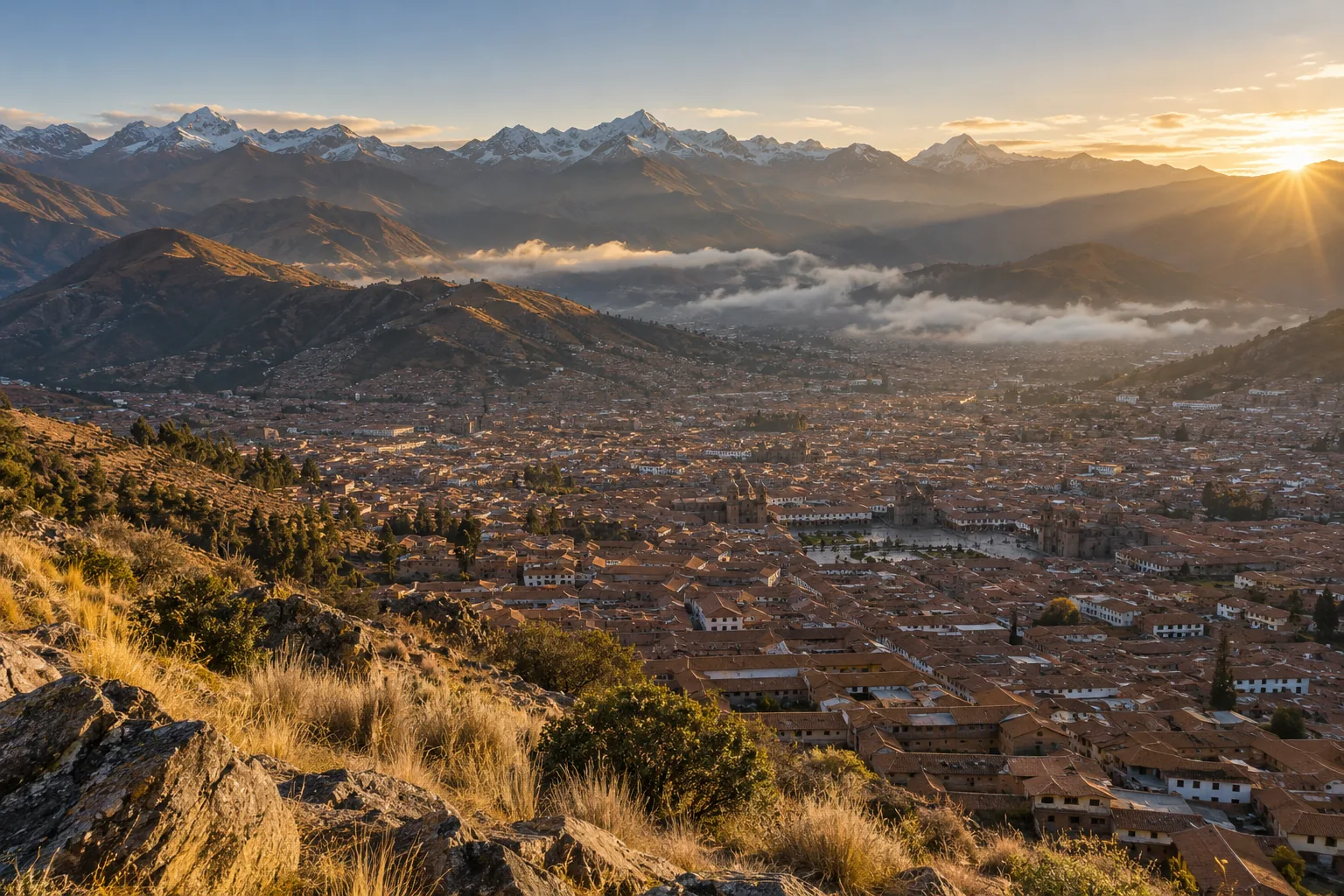
Here is what we do say. Twelve guests a week, never more, with 2 Shipibo maestros in every ceremony. A physician on site and awake through all 4 ceremonies. Cusco sits at 11,150 feet, which is why nobody drinks on their first or second night here and why blood pressure and oxygen saturation are measured on arrival and again before ceremony one. The CDC’s Yellow Book puts the threshold for altitude illness at around 8,000 feet, so altitude is part of our screening rather than a footnote at the bottom of a booking page.
We opened on 28 July 2026. We do not have 10 years of outcome data, and we are not going to borrow someone else’s and present it as ours.
If you want to work out whether any of this is appropriate for you, applications are read within 48 hours and there is no charge to apply.
Frequently Asked Questions
Does ayahuasca cure depression?
No. No study has shown that ayahuasca cures depression. The only randomized placebo-controlled trial, with 29 patients, found 64% responded at day 7 against 27% on placebo. That is a short-term antidepressant signal in a small sample, not a cure, and it has not been repeated at scale.
What does the research on ayahuasca and depression actually prove?
Less than most retreat pages imply. One controlled trial of 29 people found a real short-term drop in depression scores. The larger observational work, including the 2020 Scientific Reports study of 40 first-time drinkers, has no control group and cannot separate ayahuasca from expectation, time and setting.
Is it true that 80% of people improve after ayahuasca?
That figure comes from 18 people measured 1 month after their first ceremony, in a study with no control group. By the 6-month follow-up, only 8 of those 18 were still being interviewed. The number is real, but its scope is far smaller than the way it usually gets quoted.
How long do the effects of ayahuasca on depression last?
In the 2020 study, improvements in anxiety and hostility had faded by 6 months and only depression scores held. The authors concluded the benefits are temporary except in the case of depression, and suggested lasting benefit depends on continued use. Six of the 15 people still enrolled at 6 months had drunk again in the meantime.
Can I drink ayahuasca while taking antidepressants?
Not without a supervised taper planned with your own prescriber. MAOIs are an absolute stop. SSRIs, SNRIs, lithium, tramadol, triptans and stimulants are reviewed individually because of serotonin syndrome risk. Our physician reads every application and speaks to prescribing doctors before anyone is cleared.
How common are side effects from ayahuasca?
In the Global Ayahuasca Survey of 8,216 people, 69.9% reported an acute physical adverse effect, most often vomiting or nausea at 62.0%, and 2.3% required medical attention. Those are self-reported figures from people who chose to drink, so treat them as a floor rather than a ceiling.
Why does this page criticise the research it cites?
Reading a study’s limits is not the same as dismissing it. The 2020 paper on ayahuasca and depression contains findings worth knowing, including that 45% of first-time drinkers already met criteria for a psychiatric disorder before they drank. A centre that quotes only the flattering half of a paper is telling you something about how it will handle your medical file.
Medical disclaimer: this article is for information only and is not medical advice. Ayahuasca is not a treatment for any condition. It carries real risks, including dangerous interactions with prescription medication. Speak to your own doctor before making any decision about your health or medication.