Ayahuasca On Your Period: What Changes At Altitude
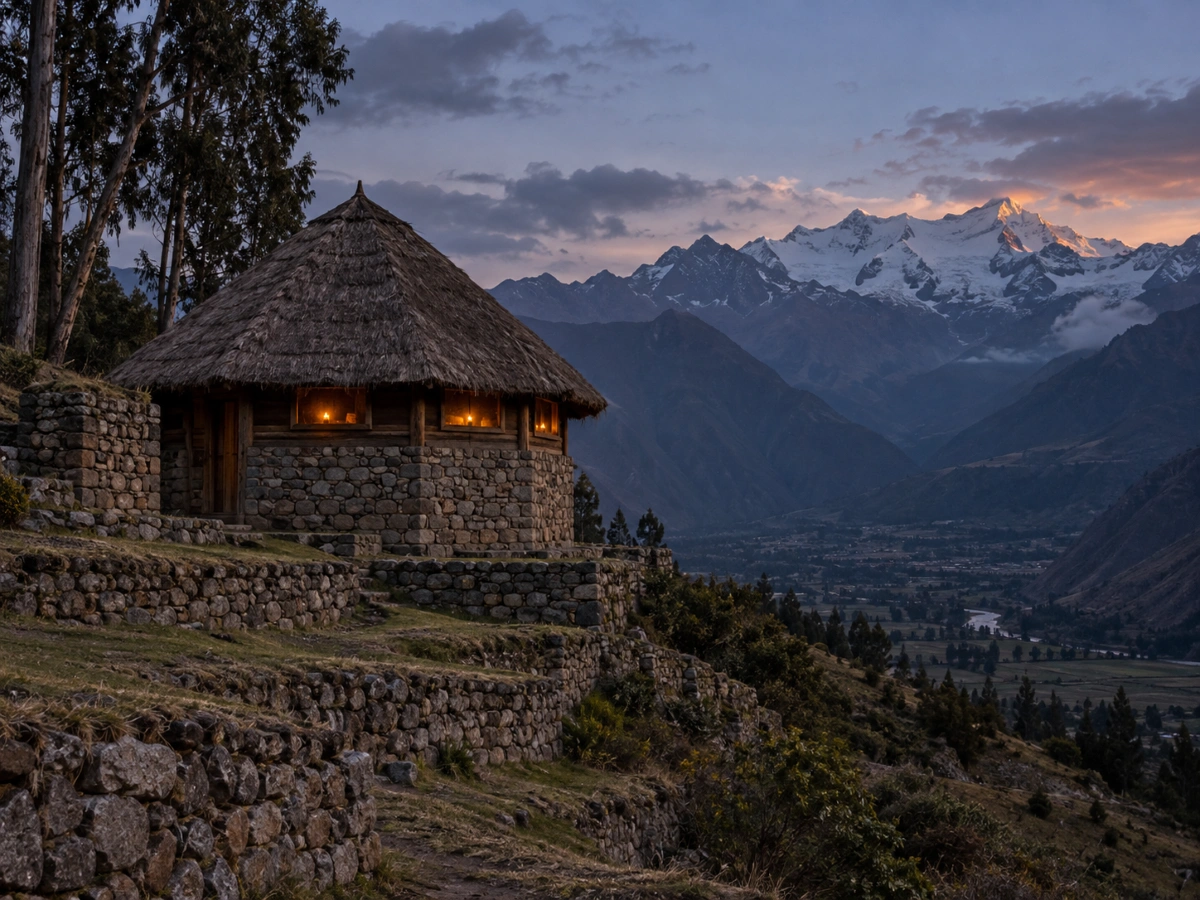
Yes, you can drink ayahuasca on your period. Menstruation is not one of the conditions on our exclusion list, and we have never cancelled a woman’s ceremony because her cycle arrived early. What we do care about is something almost nobody asks about: your iron. Our ceremony house sits high in the Andes. At that elevation your body spends its first days building red blood cells to cope with thinner air, and it needs iron to do that. A period costs you iron in the same week. That is a real interaction, and it is the one worth planning around. The energy rules you have read about elsewhere are a separate conversation, and we will get to those.
Drinking ayahuasca on your period means taking part in a ceremony while menstruating. No pharmacological interaction exists between menstruation and the brew. The restrictions you find online come from ceremonial tradition, not from medicine. The physical factors that do matter are iron status, hydration, cramping, and, at a high-altitude center, oxygen-carrying capacity.
Is menstruation a medical reason to skip ayahuasca?
No. Menstruation does not appear on any published contraindication list for ayahuasca, including ours. White and colleagues published a systematic thematic review of ayahuasca and DMT adverse events in the International Journal of Toxicology in 2024, working from 78 relevant articles across preclinical, clinical, epidemiological and pharmacovigilance data. Menstruation is not mentioned once. What that review does flag is what our screening actually screens for: personal or family history of psychosis, higher-dose harmala alkaloid toxicity, and drug interactions that get worse when serotonergic medication is stacked on top.
Our own automatic exclusions are things like uncontrolled cardiac conditions, current lithium, SSRIs without a completed taper, pregnancy, and severe pulmonary conditions. A physician reads every application and turns some of them down. None of those rejections has ever been about a menstrual cycle.
For scale on how ordinary this is: the NIH’s StatPearls reference physiology puts normal menstrual frequency at every 24 to 38 days, with bleeding of 8 days or less. Run those numbers against a retreat week and a large share of women of menstruating age will overlap. A policy that excludes them turns away a lot of the people the medicine helps most, and calls it caution.
The iron problem nobody screens for at altitude
We think the field has this backwards. Up here the variable that decides how your week goes is iron.
Your body responds to lower oxygen pressure by producing more red blood cells, and that process consumes iron. In 2018 Olfert and colleagues published a study in the Journal of Applied Physiology that sent endurance athletes to 2,500 m for 4 weeks and split them by serum ferritin. The 9 athletes who arrived iron-deficient showed no rise in red cells and no gain in maximal oxygen uptake. The 10 with normal iron stores increased both. In a second arm of the same study, athletes given enough iron before and during an identical 4-week exposure did build the extra red cells.
Now stack menstruation on top of that. Then stack the baseline: the World Health Organization estimates that 30.7% of women aged 15 to 49 were anaemic in 2023. Close to a third of the women reading this page are already low before they board a plane.
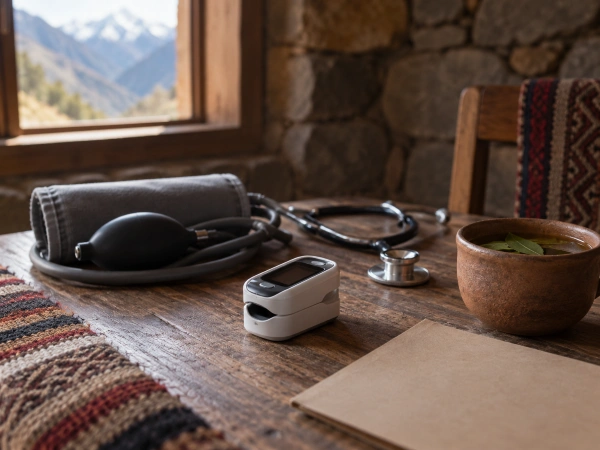
This is why our screening asks about anaemia and iron status, and why a physician with altitude experience reads your file rather than a booking agent. We check oxygen saturation during the acclimatisation days that open every retreat. A guest who is menstruating and iron-deficient will usually show it in her oxygen numbers and her headache before she ever reaches the ceremony room.
We do not think most centers banning menstruating women on energetic grounds have ever measured a guest’s ferritin. They are enforcing a rule that answers a question they never asked.
If your ferritin has ever been flagged as low, get it tested before you book anything at this elevation. Sea-level centers can afford to ignore this. We cannot.
Why shamans ban menstruating women, and what that rule is actually about
The traditional restriction is real, it is old, and it is not a medical claim. In much of Amazonian and Andean practice, menstruation is treated as a period of concentrated energy that pulls downward toward the earth, while ceremony work moves upward. Some healers hold that proximity to a menstruating woman can make them ill. Colombian centers tend to enforce this hardest, seating women apart or asking them to drink outside the group space.
Our maestros carry the Shipibo tradition, and they treat the restriction as a question about the healer’s own protection rather than about the woman being unclean. That distinction matters, and most articles on this topic blur it.
Where we differ from the strict reading is on what follows from it. A tradition can hold that menstrual energy is powerful without concluding that a woman should be removed from the room. Those are 2 separate steps, and the second one is a policy choice, not a teaching. Read the full rules that govern ceremony and you will see where we drew the line.
What changes in ceremony when you are on your period
Three things change, and none of them is the medicine.
| Factor | At a lowland center | At altitude | What we do about it |
|---|---|---|---|
| Iron and oxygen | Minor issue | Menstrual iron loss competes with altitude red cell production | Ferritin and anaemia questions at screening, oxygen saturation checks across the acclimatisation days |
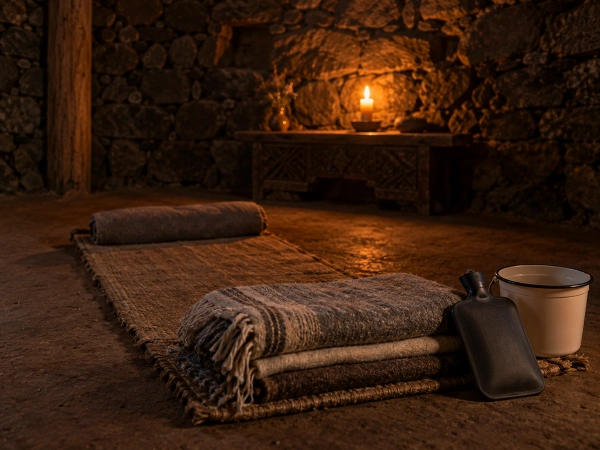
| Cramping | Warm climate, cramps ease | Ceremony nights are cold, and cold tightens cramping | Hot water bottles, extra alpaca blankets, heat in the room |
| Purging | Standard | Body is already processing altitude stress, first-night purge can be heavier | Conservative first dose, lined bucket, facilitator within arm’s reach |
| Fatigue | Manageable | Compounds with altitude fatigue in the first days | Nobody drinks on night 1 or night 2 |
What does not change: the dose logic, the icaros, where you sit, or whether a maestro comes to your mat. We cap ceremonies at 12 guests. Nobody gets moved to the edge.
One thing guests report and we cannot explain with physiology: some women describe their heaviest ceremony as the one that fell on the first or second day of their cycle. We are not going to dress that up as evidence. We have no controlled comparison. We mention it because you will hear it from other women and it is better coming with the caveat attached.
Our policy in 2026
You will not be turned away, rejected, refunded out, or relocated because of your cycle. You drink in the ceremony room with everyone else.
Two things we do ask. Tell us during your intake call, or tell a facilitator on arrival if your dates shift. It is not a confession, it is a clinical detail, the same as telling us about a migraine pattern. And take the iron question seriously enough to get tested if you have any history of anaemia.
A maestra is in the ceremony space every night, and so is a female facilitator. There are never fewer than 2 women in the room. That was a deliberate structural decision, and you can read more about who is actually in the room with you.
Should you book around your cycle?
Only if it is free to do so. If you are choosing between 2 dates that work equally well, take the one that avoids your first 2 days. If shifting your dates means waiting 6 months, do not wait.
Dry season retreats fill months out, so cycle-timing a booking is a luxury most guests do not have. Book the retreat you can actually attend. We publish dates well ahead, so you can see which weeks are still open before you plan anything around a calendar.
What we would not do is suppress a period with hormones to make a date work. Continuous hormonal contraception is something to raise with your own prescriber and with our physician during screening, not something to decide from a retreat blog. We have no position on it beyond that, and anyone who tells you confidently either way is guessing.
What if your period starts mid-retreat?
Nothing happens. You tell a facilitator, you get supplies, and you drink that night as scheduled.
Mid-retreat arrivals are common, which is exactly why the protocol exists as a routine rather than an exception. The gap we leave between ceremonies also means that if the first day of your cycle is rough, there is a built-in recovery window before the next one. That is not true at centers running 5 to 7 ceremonies in a week.
Cups, pads, painkillers and the practical questions
Pads, not tampons or cups, for ceremony nights. This is a traditional preference rather than a medical one, and the practical argument holds up on its own: you will be moving between your mat and a bathroom in near-darkness, and a pad needs no clean hands or clear head.
On painkillers, the rule is about the drug class, not the pain. Anything serotonergic is out. The toxicology review is blunt about why: ayahuasca contains monoamine oxidase inhibitors, and harmala alkaloid toxicity gets worse when serotonergic drugs are co-administered. Standard anti-inflammatories are a different category. Clear whatever you plan to take with our physician during screening rather than packing it and hoping. The same logic drives our whole medication and screening process.
On purging: expect it either way. The same 2024 toxicology review cites an epidemiological survey of 10,836 ayahuasca drinkers in which 69.9% reported vomiting or nausea, and 2.3% said they later needed medical attention. Your cycle does not add a new symptom. It may make the first night’s purge feel heavier because your body is already managing altitude. That settles by the second ceremony for most guests, and knowing how long a ceremony runs helps more than any of this.
What to pack if your period may overlap
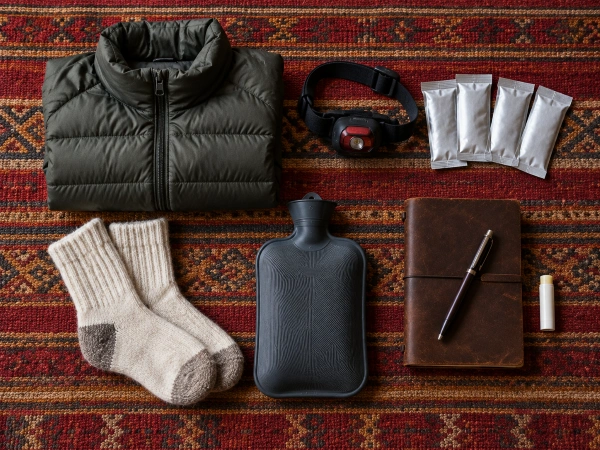
More than you think, because you cannot buy supplies on a hillside in the Andes. Bring a full cycle’s worth of pads, a hot water bottle if you prefer your own, electrolyte packets, and more wool socks than seems reasonable. Ceremony nights run near freezing. Cold makes cramping worse, and a woman shivering through hour 3 of a ceremony is not doing the work she came to do.
If your period and a retreat at altitude are both on your calendar, the thing to sort out is iron, warmth and an honest intake form. Not permission. You can ask us anything before you book, including questions you would rather not put in an application, and if you want to see what the work actually produces afterward, our depression outcome data is published in full.
Frequently asked questions
Can you drink ayahuasca on your period?
Yes. Menstruation is not a medical contraindication and it does not appear on our exclusion list. No woman has had a ceremony cancelled here because of her cycle. Some traditional centers do restrict it, so confirm the policy with any center before you book.
Does ayahuasca feel different on your period?
The medicine itself does not change. At altitude, the first night’s purge can feel heavier because your body is already managing altitude stress alongside menstrual fatigue. Cramping also worsens in cold, and our ceremony nights run near freezing.
Why do some shamans say women cannot drink ayahuasca on their period?
The restriction comes from ceremonial tradition, which treats menstrual energy as concentrated and earth-directed while ceremony work moves upward. Some healers also hold that proximity carries risk for them. It is not a medical claim, and no published contraindication list for ayahuasca includes menstruation.
Is it safe to drink ayahuasca at altitude while menstruating?
For most women, yes, with one caveat: iron. Altitude acclimatisation requires iron to build red blood cells, and a 2018 Journal of Applied Physiology study found iron-deficient athletes had no rise in red cell volume after 4 weeks at 2,500 m. WHO estimates 30.7% of women aged 15 to 49 were anaemic in 2023. Get ferritin tested before a high-altitude retreat if you have any history of anaemia.
Should I use a tampon, a cup, or a pad in ceremony?
Pads. It is partly traditional preference and partly practical: ceremonies run in near-darkness for hours, and a pad requires no clean hands or clear head to manage.
Can I take painkillers for cramps before a ceremony?
Not serotonergic ones. Ayahuasca contains monoamine oxidase inhibitors, and the 2024 toxicology review in the International Journal of Toxicology flags worsening harmala alkaloid toxicity when serotonergic drugs are co-administered. Clear any medication with our physician during screening rather than deciding on arrival.
Will I be turned away if my period starts during the retreat?
Not here. You tell a facilitator, you get supplies, and you drink that night as scheduled. Policies vary widely between centers, so ask this question directly before you pay a deposit anywhere.