Ayahuasca Retreat Preparation, Participation And Integration: What Guests Get Wrong
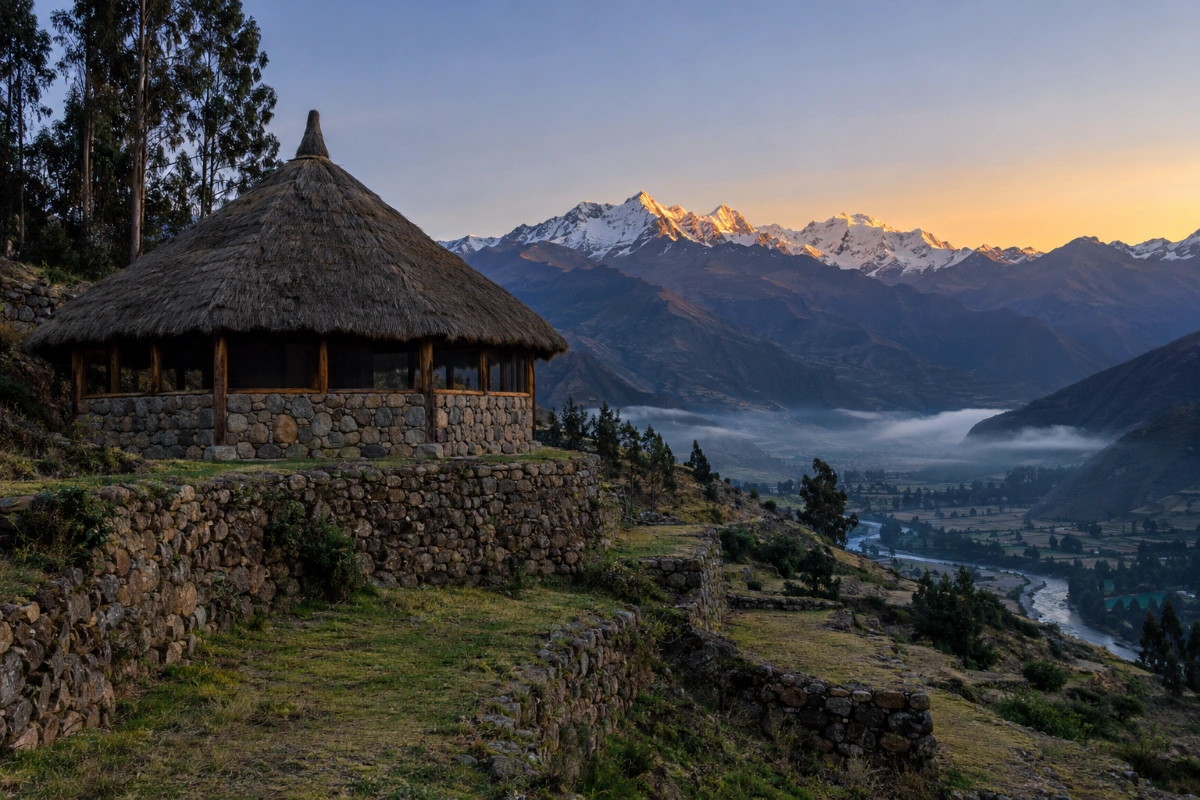
Ayahuasca retreat preparation has three parts and most guides cover one. The food rules get all the attention. The part that decides how your first ceremony goes is the part nobody writes about: how you get to altitude and what your body does in the 48 hours after you land. We run a 12-day retreat at our Sacred Valley centre, 2,900 metres up and 90 minutes from Cusco. Across 9 years and roughly 2,000 guests, the most common preparation mistake has never been a broken dieta. It has been booking a flight that lands on the morning the retreat starts. This covers all three stages: what to do before you fly, how to take part once you are on the mat, and what the first month at home asks of you.
Why ayahuasca retreat preparation starts with your flight, not your food
Book your arrival in Peru at least one full day before the retreat begins. That single decision changes more about your first ceremony than anything you eat in the two weeks before it.
Ayahuasca retreat preparation is the 4 to 6 weeks of dietary, medical and logistical work done before a retreat begins. It covers a restricted diet, supervised withdrawal from interacting medications, abstinence from alcohol and cannabis, and, for highland centres, arriving early enough to acclimatise to altitude before the first ceremony.
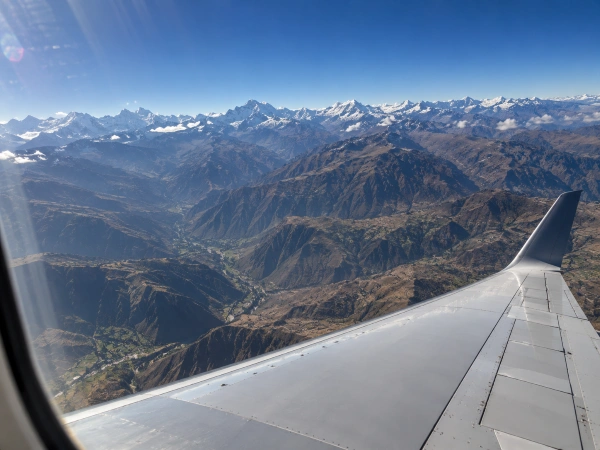
Here is the part the rest of the field leaves out. Lima sits at sea level. The flight to Cusco takes about 1 hour 15 minutes and lands you near 3,350 metres. The Wilderness Medical Society’s 2024 clinical practice guidelines put unacclimatised people at risk of altitude illness above 2,500 metres, and as low as 2,000 metres in susceptible people. For travel above 3,000 metres the panel recommends gradual ascent by no more than 500 metres of sleeping elevation per day, with a rest day every 3 to 4 days. A flight gives you none of that. You get the whole ascent in 75 minutes.
The numbers back it up. A 2022 Journal of Travel Medicine cohort of 142 travellers arriving in Cusco at 3,350 metres found that 39% had acute mountain sickness in the first 48 hours. The authors put it plainly: “In our cohort, AMS affected two out of five travellers.” That cohort was young language students, median age 21, not retreat guests, so read it as a signal about the city rather than a prediction about you. The same study found that coca leaf tea, which 34% of them drank as a preventive, was not associated with a lower risk. Acetazolamide was.
Our centre sits at 2,900 metres, about 450 metres below Cusco. The drive down the valley is itself part of the acclimatisation, which is one reason we ask guests to spend their first night in Peru in the Sacred Valley at roughly 2,600 metres rather than in the city.
In our first year we did not understand any of this. Guests arrived and drank on the second night. Three of them developed moderate altitude sickness during retreat, which wrecked their ceremonies and produced two negative reviews. In 2018 we rebuilt the whole format: 10 days became 12, two full acclimatisation days went in before the first ceremony, coca tea became part of the daily routine, and Dr. Medina joined as medical director with altitude medicine training from the Instituto de Investigaciones de Altura in La Paz. That restructure is the single biggest reason the work goes better now than it did in 2017.
The 6-week countdown we send every guest
Preparation runs on a schedule, not a mood. Here is the one we send 4 weeks out, working backwards from night 4 of the 12-day retreat format.
| When | What happens |
|---|---|
| 6 weeks out | Medication review with Dr. Medina and your own prescribing doctor. Any SSRI or SNRI taper begins here, supervised. Book your Peru arrival for at least 1 day before the retreat |
| 4 weeks out | Preparation guide arrives: journaling prompts, breathing exercises, altitude guidance. Begin light cardiovascular exercise |
| 2 weeks out | Dieta begins. No pork, no red meat, no aged cheese, no fermented foods, no alcohol, no cannabis. ADHD medication, tramadol and St John’s Wort stop |
| 1 week out | Caffeine stops. Sexual abstinence begins. 5-HTP stops |
| 1 to 2 days out | Arrive in the Sacred Valley at about 2,600 metres. Rest, drink water, do nothing strenuous |
| Retreat days 1 to 2 | Acclimatisation. No ceremony. Coca tea, short walks on the terraces, settling in |
| Retreat day 3 | Despacho opening at sunrise on the eastern terrace. Final preparation |
| Retreat night 4 | First of 4 ceremonies, on nights 4, 6, 9 and 11 |
Two gaps in that grid are deliberate. Days 7 and 8 carry no ceremony, which gives a longer stretch to sit with what came up. Don Julio’s argument for it: “If you drink every night, you are shouting at a river. If you leave space, the river speaks back.”
What can you eat before an ayahuasca ceremony?
Start the dieta a minimum of 2 weeks out. Cut pork and red meat, aged cheeses and fermented foods, alcohol, recreational drugs including cannabis, excess salt, sugar and spice, and processed food. Caffeine tapers down and stops a week out.
The aged cheese and fermented food rules are not superstition. They are about tyramine, which the MAO-inhibiting compounds in the caapi vine interact with. The pork and red meat rules come from the vegetalista tradition rather than from pharmacology, and we keep them because the healers who carry the tradition ask for them.
On retreat, Ana Maria Condori runs the kitchen, sourcing trout from the Vilcanota, potatoes and quinoa from highland farms, vegetables from the property garden and fruit brought up by families in the Quillabamba valley. Non-ceremony days get three meals. Ceremony days get fruit and quinoa for breakfast, then a final meal at 4pm of plain quinoa, boiled potatoes and simple vegetables with no salt and no spice. No dinner.
Does anyone actually follow it? Patricia Rojas asks every guest face to face on arrival day: last drink, last sexual contact, dieta compliance. People tell the truth more often than you would expect. And the enforcement mechanism was never us. A poorly prepared body gets more physical distress and less clarity. After 9 years I can say the dieta is not gatekeeping. It is biochemistry.
Which medications have to stop, and how long before?
Every medication decision at our centre is made jointly by Dr. Medina and your own prescribing physician. Never taper on your own, and never taper on a timeline you found in a blog post, including this one.
| Medication | Minimum window before arrival |
|---|---|
| SSRIs | 6 weeks, 8 weeks for fluoxetine |
| SNRIs | 6 weeks |
| ADHD medication | 2 weeks |
| Tramadol | 2 weeks |
| St John’s Wort | 2 weeks |
| 5-HTP | 1 week |
| Benzodiazepines | Case by case, supervised taper only |
Some conditions rule ayahuasca out altogether, and altitude adds a second list that lowland centres never have to think about, including severe pulmonary conditions and uncontrolled cardiac disease. We turn away 13% of applicants outright, and another 4 to 6% are accepted on conditions they never meet, so roughly one applicant in five never attends. If a retreat cannot say no to you, that is information about the retreat.
What actually happens in an ayahuasca ceremony?
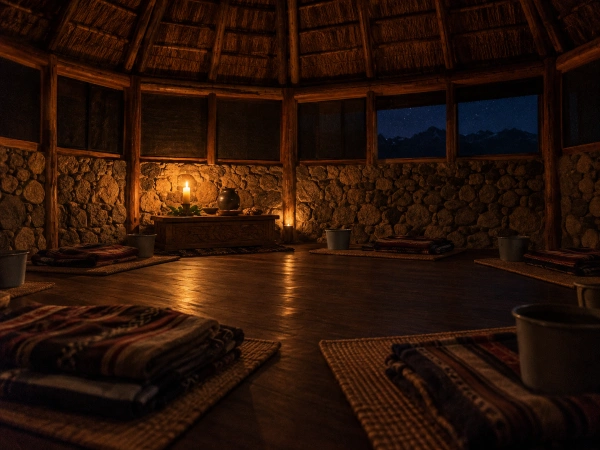
Four ceremonies, on nights 4, 6, 9 and 11, each running from roughly 8pm to 3am in an octagonal stone maloca with a maximum of 14 guests, and the three healers plus 2 facilitators in the room.
The sequence is the same every night. Last meal at 4pm. Quiet time in the cabanas until 7:30pm, when the temperature outside is already dropping toward 5 degrees Celsius. Mats at 8pm, placement assigned by Don Julio and unchanged across all four nights. Guidelines at 8:15pm. At 8:30pm Don Julio opens with mapacho and icaros that call the surrounding apus by name: Chicon, Pitusiray, Sawasiray, Veronica. Medicine is served between 8:45pm and 9pm, first-night doses typically 40 to 60ml. Then the candle goes out.
Altitude changes the timing. Onset runs about 15 to 20 minutes slower here than at sea level, which stretches how long a ceremony runs and makes the wait in the dark longer than most first-timers expect. The peak sits between 9:30pm and 12:30am. From 12:30am to 2:30am Don Julio moves mat to mat. Closing icaros around 2:30am, candle relit at 3am, coca tea, and a walk back along lit stone paths in cold mountain air that most guests describe as the steadiest part of the night.
Second cups are offered around 10:30pm. Don Julio declines roughly 20% of requests. You can also skip a whole ceremony, and about 5 to 8% of ceremony opportunities are sat out with no pressure from anyone.
What is the purge actually like?
It is vomiting. Sometimes diarrhoea. It typically runs 30 to 90 minutes in the first half of the ceremony and gets less intense with each subsequent night.
Every retreat website mentions purging. Almost none describe it, which leaves people to imagine something either mystical or catastrophic. The published data is more useful than either. In the Global Ayahuasca Survey of 8,216 ayahuasca drinkers, reported in PLOS Global Public Health in 2022, 69.9% reported acute physical adverse effects and 62.0% reported vomiting or nausea. Only 2.3% needed subsequent medical attention. On the psychological side, 55.9% reported adverse mental health effects, and around 88% of those considered them part of a positive process of growth or integration. That is self-reported survey data, not a clinical trial, so weigh it accordingly.
At 2,900 metres the first night can be rougher, because the body is working on the medicine and on the altitude at the same time. You will have a lined bucket. A facilitator replaces it without a word. Nobody is embarrassed. By the third ceremony somebody usually purges, somebody laughs, and the whole room dissolves into suppressed giggling. David calls it the purge giggle. It is the moment the group actually becomes a group.
Participating when the fear arrives
Say something. To a facilitator, to Don Julio, to another guest at breakfast. Fear that stays inside your head is the only kind that stops the work.
At 2am the protocol is specific. The nearest facilitator comes to your mat and makes verbal contact first: “I am here. You are safe. Can you hear me?” Physical contact only with explicit consent, asked for again every time even if you gave it an hour ago. One of the healers comes to sing directly at your mat. If you are unresponsive or hyperventilating, the facilitator calls Dr. Medina on the radio and he is there in two to three minutes with a pulse oximeter and oxygen, because at this elevation low oxygen saturation can look a great deal like panic.
Two phrases carry more weight in that room than anything I could write here. Whatever it takes. Trust the process. And one honest caveat on the first of them: I have watched guests speak it and do better, but that is my observation across 9 years, not a measured finding.
Ayahuasca integration: the week you feel best is not the week you get home
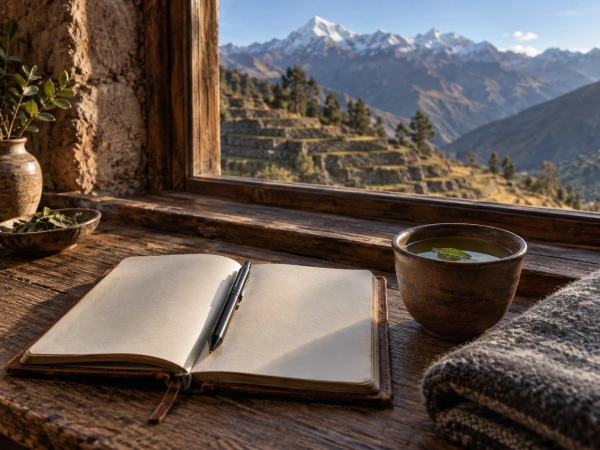
Integration is the work of turning what happened in ceremony into changed behaviour at home, and the window that matters most is weeks 2 to 6, not the first few days.
There is data on the shape of this. A 2022 naturalistic longitudinal study in Frontiers in Pharmacology followed 53 people and measured them at 7 days and 1 month after ceremony. Depression scores fell from 10.87 at baseline to 3.06 at day 7, then rose to 4.53 at 1 month. Anxiety went 7.36, then 3.47, then 3.36. The sample is small and uncontrolled, so treat the exact figures lightly. The shape is the point: the best you feel is roughly a week after you get home, and some of it drifts back by week 4.
That drift is not failure. It is the retreat ending and your actual life starting. Our own numbers say the same thing from a different angle, and they sit alongside what the depression research shows. Across roughly 310 guests with complete 3-month follow-up since 2020, average PHQ-9 went from 12.1 at intake to 6.4 on day 12 to 6.3 at 3 months. A 5-point change is clinically meaningful, so a 5.8-point drop that holds is a real result. It is also observational data from people who chose to come and chose to respond, and 29% of our guests do not show meaningful improvement at 3 months. We publish that number because almost nobody in this industry knows theirs.
What 12 months of integration looks like in practice
Every guest gets a structured year, not a handshake and an email address.
- Phase 1 runs during the retreat: morning integration circles of 90 minutes to 2 hours, at least 2 individual check-ins, at least 2 healer consultations, guided journaling and a departure session.
- Phase 2 covers weeks 1 to 8: a 30-minute video call in week 1, a 20-minute follow-up in week 3, an email check-in at weeks 6 to 8.
- Phase 3 runs months 3 to 12: PHQ-9 and PCL-5 surveys at month 3, emails at months 6 and 12.
Roughly 85% of guests take the week 1 call. By month 6 it is about 40%, which is honest rather than flattering. Underneath it sits an emergency WhatsApp line with a 4-hour response, a referral network of more than 25 integration-aware therapists across 6 countries, and an alumni Signal group of about 320 people. In 9 years, 12 to 15 guests have used the emergency line for a serious post-retreat crisis. All were resolved with more support. None needed psychiatric hospitalisation.
David Ashworth runs it. He spent 10 years as an NHS clinical psychologist, came here as a guest in 2019 after his own burnout, stayed, completed a full year of extended plant dieta work, and now has over 500 hours of ceremony facilitation.
What separates guests who integrate well from those who don’t
The ones who do well change something concrete within 3 months. The ones who struggle expect the medicine to do the work for them.
Guests who integrate well keep a daily practice going, make at least one real change in their outside life inside 3 months, stay connected to a therapist or the alumni group, and accept that progress is not a straight line. Guests who struggle go back to the identical environment, isolate, and book another retreat instead of doing the daily work.
Here is the myth I have the most first-hand evidence against: ayahuasca as a shortcut past years of therapy. The medicine reaches material that talk therapy has trouble getting to. But insight is not healing. Knowing why you are depressed is not the same as not being depressed. The door opens faster. Walking through it takes exactly as long as it ever did.
How to judge any ayahuasca retreat in 2026
If you can only afford one retreat and it is not ours, screen for five things in this order: named healers with verifiable experience, a screening process that can reject you, medical support on site, integration support after departure, and groups of 15 or fewer.
Notice what is not on that list. Reviews. Reviews tell you about somebody else’s experience, not about the centre’s safety protocols, and the two are unrelated. Ask instead who cooks the medicine, how many guests sit per healer, and what the centre does at 2am when somebody stops breathing normally.
Our answers, for comparison. Three healers and two facilitators for a maximum of 14 guests, a ratio of about 1 guest to 2.8 staff. Don Julio and Esteban cook every batch themselves over 12 to 16 hours, and if Don Julio cannot cook, the ceremony is postponed. In 9 years he has discarded three batches. Across roughly 2,000 guests and more than 700 ceremonies at 2,900 metres: zero deaths, one medical evacuation with full recovery, zero incidents of sexual or physical misconduct.
Ayahuasca retreat preparation, participation and integration are not three separate projects. They are one arc, and the part most people skip is the flight. Get to altitude early, eat plainly for two weeks, tell the truth on your intake form, and put the work in during weeks 2 to 6 at home. If you want us to look at your history, send us your application and Dr. Medina reads it before anything else happens.
Frequently asked questions
How long before an ayahuasca retreat should preparation start?
Start 6 weeks out if you take any medication that needs a supervised taper, and 2 weeks out for the dieta at minimum. SSRIs need 6 weeks off, fluoxetine needs 8. If you take nothing, 4 weeks gives you enough room for the food changes and the travel booking without rushing.
What can you not eat before an ayahuasca ceremony?
No pork, no red meat, no aged cheeses, no fermented foods, no alcohol and no cannabis, starting at least 2 weeks before arrival. Caffeine stops a week out. The aged cheese and fermented food rules relate to tyramine, which interacts with the MAO-inhibiting compounds in the caapi vine.
Does altitude affect ayahuasca retreat preparation?
It changes it completely. Cusco sits at roughly 3,350 metres and the flight from Lima takes about 75 minutes, so you gain the entire elevation in one morning. In a 2022 Journal of Travel Medicine cohort of 142 travellers, 39% developed acute mountain sickness within 48 hours of arriving. Arrive at least a full day early.
Does coca tea prevent altitude sickness?
The evidence says no. In that same Cusco cohort, 34% of travellers drank coca leaf tea to prevent altitude sickness and it was not associated with a lower risk. Acetazolamide was. We still serve coca tea daily, because guests find it settles the stomach, not because it protects you.
How long does the purge last during an ayahuasca ceremony?
Usually 30 to 90 minutes, in the first half of the ceremony, and it gets less intense with each subsequent night. In the Global Ayahuasca Survey of 8,216 drinkers, 62.0% reported vomiting or nausea and 2.3% needed medical attention afterwards. At 2,900 metres the first night is often the hardest, because the body is processing the medicine and the altitude together.
What is ayahuasca integration and how long does it take?
Ayahuasca integration is turning what surfaced in ceremony into changed behaviour at home. Our program runs 12 months: a video call in week 1, a follow-up in week 3, an email check-in at weeks 6 to 8, then surveys and check-ins at months 3, 6 and 12. The weeks that decide the outcome are 2 through 6.
What percentage of applicants get turned away?
We reject 13% outright and conditionally accept another 4 to 6% who mostly never meet the conditions, so roughly one applicant in five never attends. Dr. Medina reviews every application. A retreat that accepts everyone who can pay is telling you something about its screening.