Rapé Ceremony (Hapé): What To Expect Inside An Ayahuasca Retreat
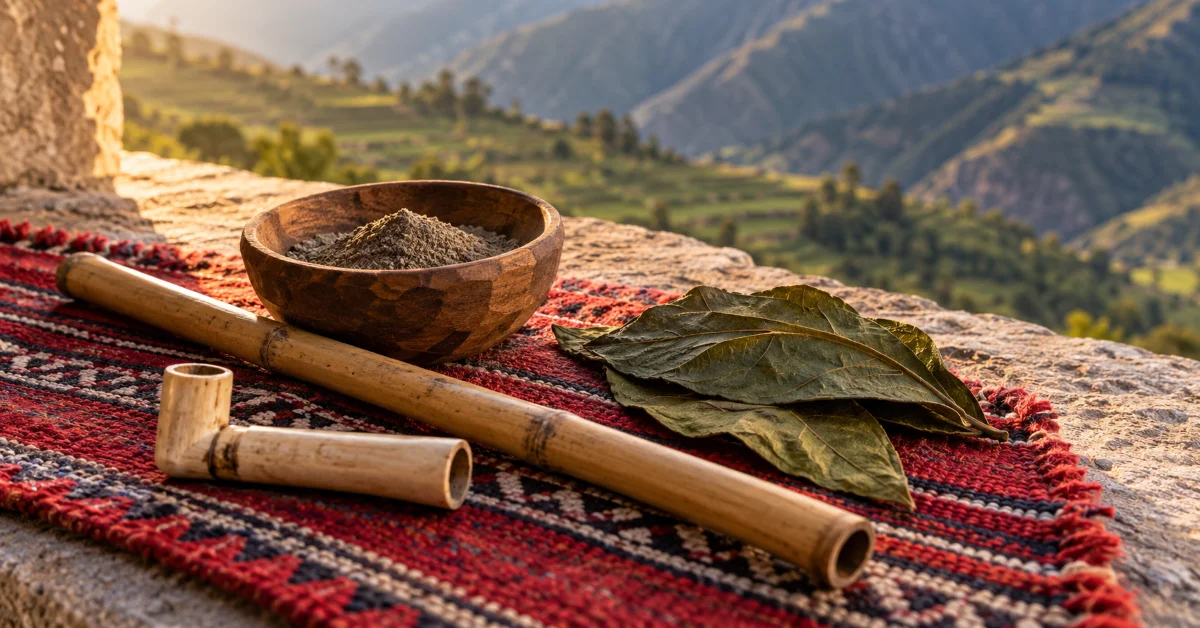
A rapé ceremony is an Amazonian tobacco ritual. A server blows rapé, a fine snuff made from Nicotiana rustica tobacco and plant ash, into each of your nostrils through a pipe called a tepi, or you self-apply it with a kuripe. Within minutes you feel burning, tears, and head pressure, sometimes nausea, then a heavy, quiet focus.
That’s the whole ritual, and it’s over fast. At Cusco Ayahuasca Retreats we call it hapé. It runs as its own session with Maestro Esteban Chujandama Quispe, apart from our 4 ayahuasca nights, and it’s included in the 12-day retreat. Inside the maloca, tobacco shows up as mapacho smoke, not snuff.
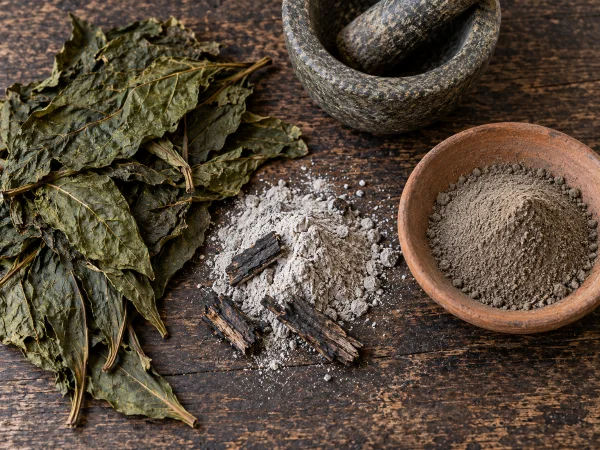
What’s in the powder
Rapé is powdered tobacco mixed with plant ash, and the ash changes how hard the nicotine hits. The word itself is Portuguese for snuff. English has an old cousin, “rappee,” from the French râpé, meaning grated (American Heritage Dictionary).
In 2015, CDC chemists published the first detailed chemical breakdown of rapé, using products collected in Brazil (Stanfill and colleagues, Food and Chemical Toxicology). Every tobacco rapé they tested contained Nicotiana rustica, a high-nicotine tobacco. The 2 hand-made blends from Acre, in the western Amazon, measured pH 9.75 and 10.2, which the authors tie to alkaline plant ash.
In those 2 blends, over 98% of the nicotine was free-base, 15.4 to 18.5 mg per gram. The US moist snuff data the authors cite tops out at 7.81 mg/g of free-base nicotine. Free-base is the form of nicotine the team notes is absorbed faster through the lining of the mouth. Through the nose it’s quick too: the FDA label for Nicotrol NS, a prescription nicotine nasal spray, puts peak blood levels 4 to 15 minutes after a dose.
In the Peruvian Amazon, “mapacho” is the common name for N. rustica, according to a 2023 study in the journal Plants. So when Don Julio opens a ceremony with mapacho smoke, he’s usually smoking the same species that goes into most rapé.
What happens in a rapé ceremony, step by step?
You sit, you receive the snuff in each nostril, and you stay with it until it passes.
- Settle in. Servers often ask you to sit upright and hold 1 intention: a question, a prayer, or something you want to put down.
- The blow. With a tepi, the server loads the pipe and blows powder into 1 nostril, then the other. With a kuripe, you do it yourself. Don’t sniff. Breathe through your mouth.
- The first minutes. Expect burning, watering eyes, a runny nose, sneezing, and pressure across your forehead. Some people drool or feel sick.
- Silence. Circles tend to sit quietly while the sensations fade. Spit or blow your nose whenever you need to.
- Afterward, stand up slowly and drink some water.
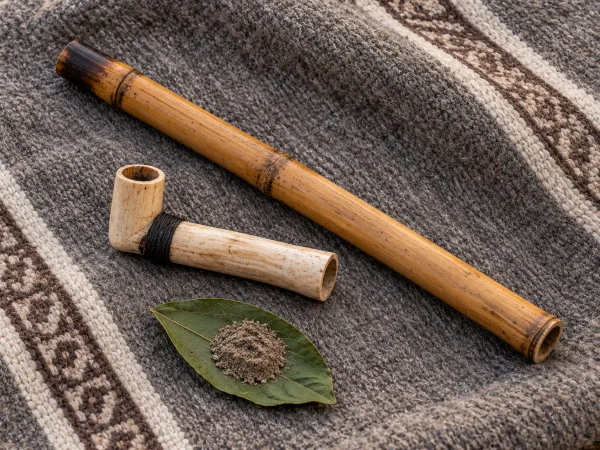
Tepi or kuripe: 2 ways to receive it
| Tepi | Kuripe | |
|---|---|---|
| Who blows | The server | You |
| Shape | A longer pipe that runs between 2 people | A short pipe that runs from your mouth to your nostril |
| Who controls the force | The server | You |
| Where you’ll meet it | Ceremonies and circles | Personal practice and some circles |
| What to ask | Is the pipe cleaned between guests? | Bring your own |
Where hapé fits in our 12-day retreat in 2026
Hapé is a separate session with Maestro Esteban, outside our 4 ayahuasca nights. The retreat price covers it: $3,200 for an individual cabana or $2,600 per person shared.
Here’s how the 12 days run. Days 1 and 2 are acclimatization only: coca tea, gentle walks on the terraces, no ceremony activities. Day 3 opens with Don Julio’s despacho offering at sunrise. Ceremonies fall on nights 4, 6, 9, and 11. Around them you get integration circles, at least 2 individual consultations with the healers, plant baths, sananga, and hapé sessions with Esteban.
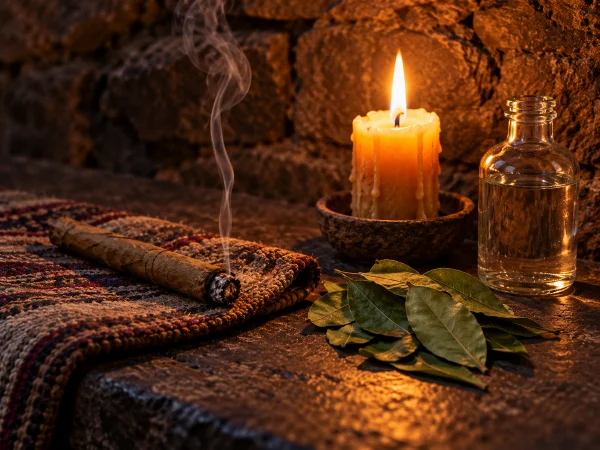
The 3 ways tobacco shows up at our center
Mapacho is part of the vegetalista ceremony form, so you’ll meet tobacco 3 ways:
- Mapacho smoke at the opening. At about 8:30 PM on ceremony nights, Don Julio lights mapacho and blows smoke to the 4 directions before he sings.
- Mapacho smoke during healing. A healer may blow smoke over you, but only after asking your consent out loud, every time.
- Hapé, the snuff, in sessions with Esteban.
Only the third goes up your nose.
Esteban is Don Julio’s nephew. He was born in Lamas, in Peru’s San Martin region, and trained from age 18 under his father and uncles in the Chujandama lineage. He led ceremonies on his own in San Martin before joining us in 2019. He has 24 years with these plants, has dieted 20 master plants, and cooks every batch of our ayahuasca with Don Julio. He speaks Lamista Quechua, Spanish, and basic English, and David or Patricia translate your consultations.
Why tobacco, when Don Julio refuses San Pedro
Don Julio runs 1 medicine per retreat on purpose. San Pedro grows on our land, and we still don’t serve it, or kambo, or bufo. His words, translated: “Each medicine has a spirit. Each spirit has a way of working… But you do not study two languages in the same classroom at the same time.”
Tobacco is the exception in practice. In the vegetalista tradition Don Julio and Esteban trained in, mapacho belongs to the ceremony itself, next to the icaros and the brew. Hapé sits beside sananga and the plant baths Isabel and Luz prepare.
Rapé vs ayahuasca, side by side
| Hapé (rapé) | Ayahuasca | |
|---|---|---|
| What it is | Snuff of Nicotiana rustica tobacco and plant ash | Brew of Banisteriopsis caapi vine and chacruna leaf, nothing else |
| How you take it | Blown into each nostril | Drunk from a cup; first-night doses typically 40 to 60 ml |
| How fast it hits | Nasal nicotine peaks in the blood in 4 to 15 minutes | Starts between 9:00 and 9:30 PM on our ceremony nights; at our altitude, onset runs 15 to 20 minutes slower than at sea level |
| How long it lasts | Minutes, not hours | Ceremony runs from 8:30 PM to about 3 AM |
| Why you might vomit | A dose of nicotine | The brew; purging typically lasts 30 to 90 minutes in the first half of the night |
| Psychedelic? | No | Yes |
| Who serves it here | Maestro Esteban | Don Julio, who sets every dose himself |
| When | Its own session | Nights 4, 6, 9, and 11 |
Rapé isn’t a psychedelic. Ayahuasca is, and we’ve written up how it compares with other psychedelics. The table covers mechanics only. What ayahuasca feels like changes a lot between night 1 and night 4, and how long ayahuasca lasts depends on which clock you mean.
Why does rapé make you nauseous?
Because you absorbed a fast dose of nicotine. The detox story on retreat websites doesn’t hold up.
Split the reactions into 2 groups. The tears, runny nose, sneezing, and coughing are your nose reacting to something forced into it. In the Nicotrol NS label, those same effects showed up in the placebo group too, and 94% of patients on the spray reported nasal irritation in the first 2 days.
The nausea, extra saliva, dizziness, headache, and racing heart are nicotine. NIOSH, the CDC’s occupational safety institute, lists every one of them among the early signs of nicotine exposure. Free-base nicotine from alkaline ash reaches your blood quickly, so the wave lands in minutes.
Amazonian healers read the same moment differently. The 2023 Plants study followed a Peruvian tobacco healer who treated vomiting as part of the cure and adjusted his doses around it. The authors tie that to the Amazonian idea of depuration, a clearing out. I respect that meaning, and I won’t tell a healer what tobacco is to him. But “toxins leaving your body” is a physical claim, and the physical cause is nicotine.
Ayahuasca purging is a separate event. With the brew, our guests most often purge for 30 to 90 minutes in the first half of the night, and it eases with each ceremony. If rapé makes you sick, your body got more nicotine than it liked. It says nothing about how much negativity you carried in.
Is rapé safe, and who should skip it?
Rapé is a tobacco product, and no tobacco product is risk-free. Some people should skip it entirely.
The CDC paper’s summary says rapé “contains addictive and harmful chemicals.” The team found NNN and NNK, 2 tobacco-specific nitrosamines, plus benzo[a]pyrene, which the authors note is a Group 1 carcinogen. They also found labels that didn’t match what was inside, including unlisted tonka bean, menthol, camphor, and clove, so ask what’s in any blend before you take it. The CDC’s smokeless tobacco page says these products cause cancer of the mouth, esophagus, and pancreas, may raise the risk of death from heart disease and stroke, and can raise the risk of early delivery and stillbirth when used in pregnancy.
Our screening already turns away anyone with uncontrolled heart conditions, uncontrolled high blood pressure, or a pregnancy, for the whole retreat. We run an ECG on every guest over 45, and anyone over 60 needs medical clearance. Dr. Carlos Medina Vargas reads every application within 72 hours, and we reject 13% of applicants outright. He’s on site for every ceremony block with a blood pressure monitor, 3 pulse oximeters, and oxygen.
If you’ve quit nicotine, rapé is nicotine. If you take blood pressure or heart medication, say so before anyone loads a pipe. This is general information, not medical advice.
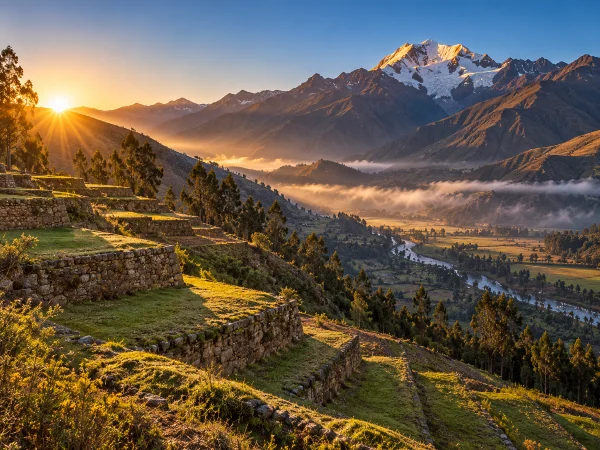
Does altitude change a rapé ceremony?
It can muddy the signals. Head pressure, dizziness, and nausea are rapé effects, and they’re also symptoms of acute mountain sickness.
The CDC Yellow Book sets a 2,450-meter risk line for sleeping altitude. It defines acute mountain sickness as a headache plus at least 1 of these: loss of appetite, dizziness, fatigue, or nausea, usually starting 2 to 12 hours after arrival. Cusco sits around 3,350 meters. Our land is at 2,900 meters.
We learned this the hard way. In our first year, 3 guests got moderate altitude sickness during retreat, and it hurt their ceremonies. For 2018 we stretched the retreat from 10 to 12 days, made the first 2 days acclimatization only, put coca tea into the daily routine, and brought on Dr. Medina, who holds altitude medicine certification from the Instituto de Investigaciones de Altura in La Paz. He checks oxygen saturation during those first days and can tell altitude symptoms from medicine symptoms. In 9 years, guests have needed supplemental oxygen during acclimatization 10 to 12 times, all handled on site.
If someone offers you rapé on your first day in Cusco, a headache or nausea afterward could be the snuff, the altitude, or both. We ask guests to arrive at least a full day early, and we’ll offer to book your pre-retreat night lower in the valley, around 2,600 meters. The Yellow Book notes that travelers to Cusco can sleep lower than the airport. We also cover how to prepare for altitude before you fly.
How to prepare for your first hapé session
Come in rested, and be honest about your health.
Our dieta asks you to stop alcohol 2 weeks before arrival and caffeine 1 week before, so you’ll already be off both. Sit upright and keep tissues and water close. Stay seated until the dizziness passes. At a circle in your hometown, don’t drive right after. The preparation mistakes guests make have their own list, and if the bigger worry is the ayahuasca itself, we checked 8 common fears against our data.
A rapé ceremony is the smallest thing you’ll do in 12 days with us, and the one where you can name the active compound. Know the chemistry and respect what it means to the people who carry it. If you’re weighing our Sacred Valley retreats, tell us the truth on your application, because that’s what lets Dr. Medina clear you.
Frequently asked questions
How long does a rapé ceremony last?
Receiving the snuff takes seconds, and the strongest effects arrive fast: the FDA label for Nicotrol NS, a prescription nicotine nasal spray, puts peak blood nicotine 4 to 15 minutes after a dose. Circles tend to sit in silence while the sensations fade. At Cusco Ayahuasca Retreats, hapé is its own session with Maestro Esteban, separate from the ayahuasca nights.
Is hapé hallucinogenic?
No. Tobacco rapé works through nicotine and doesn’t produce the visions ayahuasca can. Some blends add other plants, and CDC chemists found rapé labels that didn’t match what was inside, so ask what’s in a blend before you take it.
Is rapé served during an ayahuasca ceremony?
Some centers pass rapé around in the middle of an ayahuasca night. Ours doesn’t: inside our maloca, tobacco shows up as mapacho smoke from Don Julio, and hapé is a separate session with Esteban. Our 4 ayahuasca ceremonies fall on nights 4, 6, 9, and 11 of the 12-day retreat.
How much nicotine is in rapé?
It varies by blend. CDC chemists measured total nicotine of about 6.3 to 47.6 mg per gram across the rapé products they tested, and free-base nicotine as high as 18.5 mg per gram in hand-made blends made with alkaline ash. The US moist snuff data they cite tops out at 7.81 mg per gram of free-base nicotine.
Is rapé legal?
Rapé is a tobacco product, and the US Controlled Substances Act excludes tobacco from its definition of a controlled substance (21 U.S.C. 802). Since December 20, 2019, federal law has set 21 as the minimum age to buy tobacco products in the US. Our minimum guest age at Cusco Ayahuasca Retreats is 24.
What does rapé mean?
“Rapé” is the Portuguese word for snuff. English has a related word, “rappee,” from the French râpé, meaning grated, per the American Heritage Dictionary. We spell it hapé at our center.
Does a rapé ceremony cost extra at Cusco Ayahuasca Retreats?
No. Hapé is included in the 12-day retreat: $3,200 for an individual cabana or $2,600 per person in a shared cabana. The same price covers sananga, plant baths, the 4 ayahuasca ceremonies, and the Puente integration program after you go home.