Ayahuasca Vs San Pedro: Why We Serve Only One
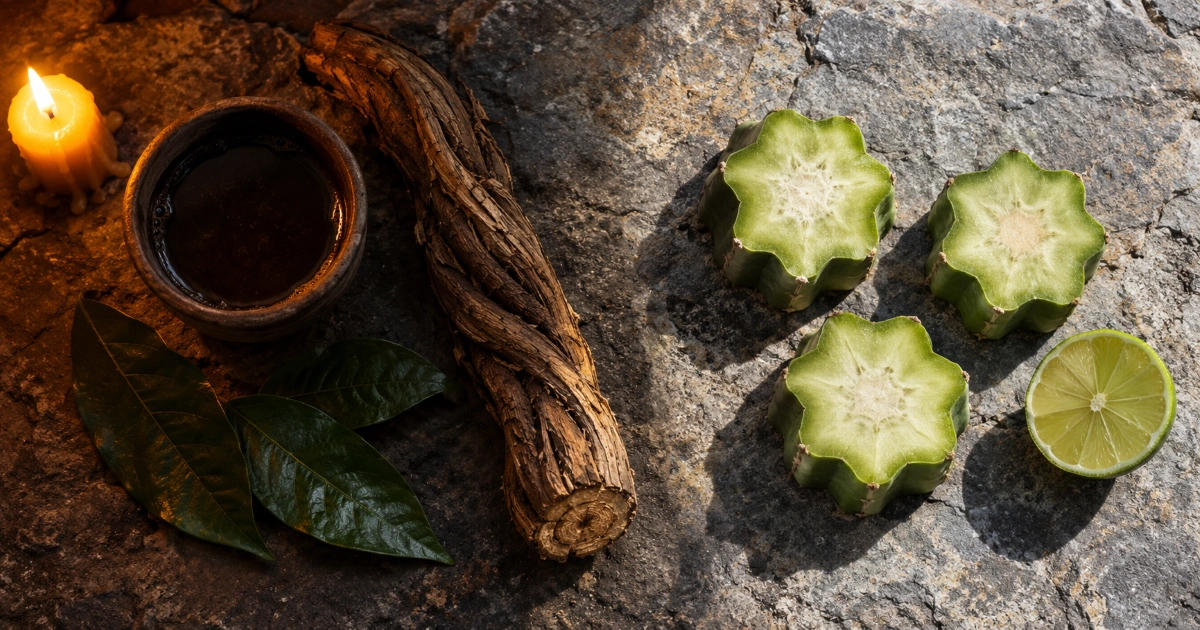
Ayahuasca and San Pedro are not 2 versions of the same thing. Ayahuasca is a brew you drink at night. It runs 4 to 6 hours and it makes most people vomit. San Pedro is a cactus you drink in the morning, and the mescaline in it can hold you for 14 hours.
Most ayahuasca vs San Pedro comparisons online are written by centers that sell both, so both come out sounding good. We sell one. San Pedro grows on our land at 2,900 meters in the Sacred Valley, and in 9 years of running ayahuasca retreats in Cusco we have never poured a cup of it. Don Julio decided that, not me.
This page is education, not medical advice. If you’re in crisis, having suicidal thoughts, or in psychosis, get emergency care now, not a retreat.
What ayahuasca and San Pedro actually are
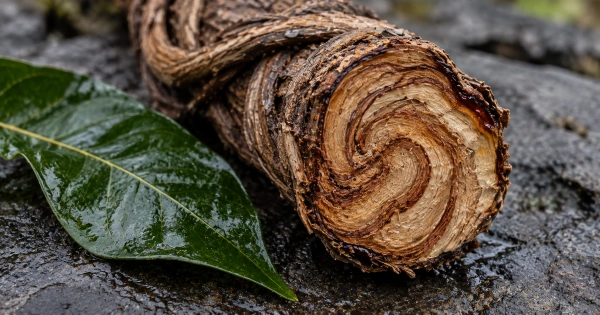
Ayahuasca vs San Pedro is a comparison of 2 different psychedelics from 2 different regions. Ayahuasca is an Amazonian brew of Banisteriopsis caapi vine and a DMT-bearing leaf, drunk at night. San Pedro, or huachuma, is an Andean cactus containing mescaline, drunk by day. They share no active compound and no ceremony form.
That last part is what gets lost. People treat the 2 as points on one scale, mild to strong. They aren’t on the same scale at all.
Our brew is caapi vine and chacruna leaf, nothing else. Don Julio and Esteban cook it together over 12 to 16 hours, and at 2,900 meters water boils near 90 degrees Celsius instead of 100, so the reduction takes longer than it would in the jungle. It comes out thick, bitter and green, and you drink 40 to 60 ml on a first night.
San Pedro is a different plant. You cut the cactus, slice it, and boil the flesh down. The active compound is mescaline, a phenethylamine. Ayahuasca’s DMT is a tryptamine held open by MAO-inhibiting harmala alkaloids in the vine. Different molecules, different receptors, different problems.
One more difference nobody mentions. Peru declared the traditional knowledge and uses of ayahuasca national cultural heritage in 2008, through the Instituto Nacional de Salud’s account of it. San Pedro got its own declaration in November 2022. Resolución Viceministerial N° 000252-2022-VMPCIC/MC declared the traditional knowledge and uses of the cactus in the curanderismo of northern Peru national cultural heritage. Cusco is in the south. That matters if you care whether the tradition you’re buying into is protected or just marketed.
| Ayahuasca | San Pedro (huachuma) | |
|---|---|---|
| Active compound | DMT plus harmala alkaloids | Mescaline |
| Plant | Vine plus leaf, boiled 12 to 16 hours | Cactus flesh, sliced and boiled |
| Region | Amazon | Andes |
| Time of day | Night | Morning |
| Length | 4 to 6 hours | 6.4 h at 100 mg, 10.7 h at 400 mg, about 14 h at 800 mg |
| Peak | 1.5 to 2 hours in | 3.2 to 4.0 hours in |
| Vomiting | 62.0% report nausea or vomiting | Reported at 400 mg and 800 mg, more often at 800 |
| Posture | Lying on a mat, dark, eyes closed | Walking, sitting, outdoors, daylight |
| Peru heritage status | Declared 2008 | Declared 2022, northern Peru curanderismo only |
How long each one lasts
Ayahuasca runs 4 to 6 hours. Mescaline runs longer, and how much longer depends on dose.
We time our ceremonies. Across 700-plus ceremonies the medicine takes 15 to 20 minutes longer to arrive at 2,900 meters than the jungle centers report, peaks around 1.5 to 2 hours in, and is finished by hour 5 or 6. Don Julio closes at 3:00 am. That is an observation from our own log, not a study finding.
Mescaline has been measured properly. In a 2024 double-blind trial published in Translational Psychiatry, Klaiber and colleagues gave healthy volunteers 100, 200, 400 or 800 mg of mescaline. Mean duration of effects was 6.4 hours at 100 mg, 10.7 hours at 400 mg, and about 14 hours at 800 mg. Peak came 3.2 to 4.0 hours after dosing. Blood pressure, heart rate and body temperature all rose with dose.
Read those numbers again. A 400 mg dose is roughly twice the length of one of our ceremonies, and it peaks around the time ayahuasca is already letting go.
Here is what that does to a day. Traditional Andean huachuma sessions start early, often with the cup around dawn, because they have to. A 12 hour medicine drunk at 8:00 pm ends at 8:00 am. So San Pedro gets held in daylight, outdoors, on your feet. That’s not a stylistic preference. It’s arithmetic.
Is San Pedro gentler than ayahuasca?
No. It’s longer, and it puts more sustained load on your cardiovascular system. “Gentle” is the single most damaging word in this field.
The DEA’s own fact sheet on peyote and mescaline lists the physical effects as “intense nausea, vomiting, dilation of the pupils, increased heart rate, increased blood pressure, a rise in body temperature that causes heavy perspiration, headaches, muscle weakness, and impaired motor coordination.” That is a government agency with no stake in plant medicine tourism describing the medicine people call the soft one.
What people mean when they say gentle is usually 3 things. Fewer visions. Less of the sense of being taken apart. More of a feeling of warmth toward other people. Those reports are real, and some of our guests have had them elsewhere. None of them is a safety claim.
Now hold that against duration. Ayahuasca gives you a hard 5 hours lying on a mat with someone within arm’s reach the whole time and a doctor in the building. San Pedro gives you 10 to 14 hours on your feet outdoors, at altitude, with your blood pressure up. If it goes wrong at hour 9, you’re 5 hours from the end of it. Ask which of those 2 situations is easier to hold, not which one feels softer at hour 3.
If you want to know what the inward part of ayahuasca actually looks like, we wrote about what people actually see and what the research says it predicts.
What screening each medicine requires
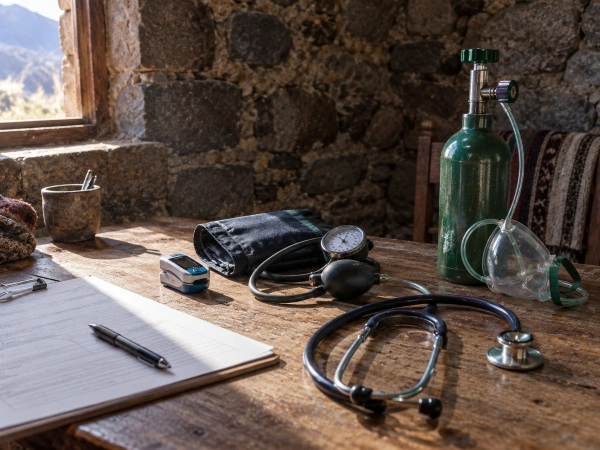
Both need a physician to read your file before anyone takes your money. Ayahuasca’s problem is drug interactions. San Pedro’s problem is your heart over a long day.
The Global Ayahuasca Survey remains the largest dataset on this. Bouso and colleagues published it in PLOS Global Public Health in 2022, and across 8,216 ayahuasca users 69.9% reported an adverse physical effect. Nausea or vomiting accounted for 62.0%, headaches 17.8%. Of the 5,742 people who reported a physical effect, 132 went on to need medical attention. That is 2.3%.
The number nobody quotes is the mental health one. In the same survey, of 7,839 respondents, 55.4% reported an adverse mental health effect in the weeks or months afterward. More than half. That number is the argument for integration, and it’s the reason we call you at week 1, week 3 and month 2 instead of shaking your hand at the airport.
Dr. Carlos Medina Vargas reads every application we receive. He’s a Peruvian-trained physician with altitude medicine certification from the Instituto de Investigaciones de Altura in La Paz. We reject 13% of applicants outright. Another 4 to 6% get a conditional acceptance and never meet the conditions, so roughly 17 to 19% of people who apply never sit in our maloca. The automatic no list includes bipolar I, psychosis history, current lithium, current pharmaceutical MAOIs, uncontrolled cardiac conditions, uncontrolled hypertension, severe pulmonary conditions and pregnancy. SSRIs need a 6 week taper, 8 for fluoxetine, supervised with your own prescriber.
Our full screening before acceptance process is published, including the disqualifiers and the washout windows. A center that won’t publish its no list doesn’t have one.
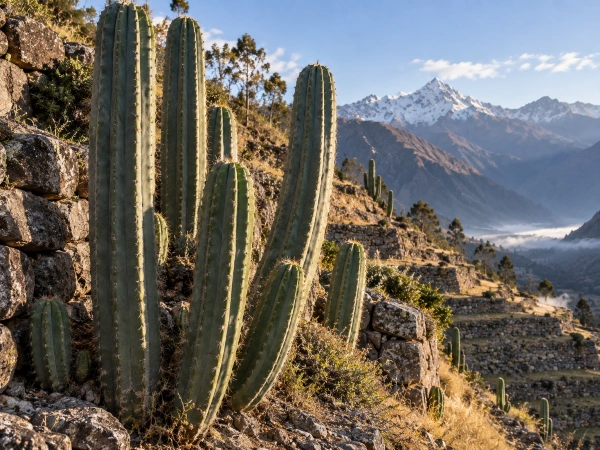
Why we won’t serve San Pedro, even though it grows on our land
Don Julio’s decision, made before the center opened, and he has never moved on it. Guests ask about it most weeks.
His reasoning, translated: “Each medicine has a spirit. Each spirit has a way of working. San Pedro is the medicine of the sun and the mountains. Ayahuasca is the medicine of the jungle and the night. They are both powerful teachers. But you do not study two languages in the same classroom at the same time.”
I’ll give you the operator’s version of the same argument. We run 4 ceremonies over 12 days, on nights 4, 6, 9 and 11, with 2 acclimatization days before the first one. That spacing exists because the body needs 48 to 72 hours to start adjusting to 2,900 meters, and because Don Julio thinks stacking ceremonies produces diminishing returns. Drop a 12 hour cactus day into that schedule and something has to give. Either you cut a ceremony, or you cut the rest between them, or you extend the retreat and the price with it.
There’s a second cost that’s harder to see. If you drink 2 different medicines in one week and something shifts in you, you don’t know which one did it. Neither do we. We’ve been collecting outcome data since 2020, and a mixed week makes that data worthless.
Don Julio is a 35% owner of this center, not a contractor we book. That’s why his call on this sticks even when it costs us bookings. You can read about who sits with you and how long each of them has been doing it.
Can you drink both in the same retreat?
Some centers offer it. We think it’s a mistake, and our objection is about sequencing rather than about either plant.
Don Julio’s line on multi-medicine weeks: mixing ayahuasca, San Pedro, kambo and bufo in one retreat is like having 6 doctors prescribe treatment at the same time without talking to each other. Each one is defensible alone. Together they’re guesswork.
If you’re looking at a center that runs both, ask these and listen to how fast the answers come:
- How many hours between the last ceremony and the cactus day?
- Who is trained in the Andean tradition specifically, and for how long?
- Does the physician screen for San Pedro separately, or once for everything?
- What’s the plan if someone is still altered at hour 12 of a daytime session?
- How many people are on shift for that whole day?
A center that has thought it through will answer in numbers. A center that hasn’t will answer in adjectives.
Which is better for a first time?
Whichever one the center will turn you away from. That sounds like a dodge. It isn’t.
The medicine matters less on a first time than the people holding it. We run 14 guests maximum with 3 healers and 2 facilitators in the room, which is roughly 2.8 guests per staff member. Plenty of centers run 20 to 30 guests with 1 or 2 healers. The plant is the same in both rooms. The night is not.
If you’re drawn to San Pedro because it sounds easier, that’s the wrong reason, and the numbers in the section above are why. If you’re drawn to it because you want a daytime, outdoor, mountain-facing process, that’s a real preference and you should go find an Andean center with experienced huachumeros rather than a center that added it to a menu.
And if you’re choosing based on which one is stronger, stop. That question predicts a difficult first night better than almost anything else we see at intake.
Does either one treat depression or trauma?
Neither one is a treatment. We have our own numbers on this, and they include the part that didn’t work.
Since 2020 every guest completes a PHQ-9 at intake, on day 12, and at 3 months. From approximately 310 guests with complete 3 month data, the average score went from 12.1 at intake to 6.3 at 3 months. That’s a drop of 5.8 points, and 5 points is the usual threshold for a clinically meaningful change. 71% held their improvement at 3 months.
Which means 29% did not. We publish that number because a center that only publishes the 71% is selling you something. This is observational data from people who chose to come and chose to answer, with all the selection bias that implies. We are not a clinical trial.
There’s more on what the research actually shows, including the errors we found when we recomputed the most-cited study in the field.
For San Pedro, I can’t give you an equivalent. Mescaline has had far less clinical attention than ayahuasca or psilocybin, and anyone quoting you outcome rates for a huachuma retreat is quoting something they made up.
What each one costs in 2026
Our 12 day retreat is $3,200 in a private cabana, $2,600 shared. The 3 week plant dieta is $6,000.
That covers airport pickup in Cusco, all ground transport, all meals, 4 ayahuasca ceremonies, the despacho, plant baths, integration circles, individual healer consultations, and the 12 months of follow-up after you leave. It does not cover flights, the Lima to Cusco hop, travel insurance, or a pre-retreat hotel night.
One thing worth saying about price. There are $8,000 to $15,000 retreats now with infinity pools and chefs. The medicine works through surrender and discomfort. Our guests complain about the cold, and the rooms are stone with a wood stove. Clean water, real food and a doctor on site are safety, not luxury. The pool is not medicine.
When neither is the right call
There are weeks when the answer to ayahuasca vs San Pedro is neither, and that’s most of what a screening call is for.
- Don’t apply anywhere right now if you’re in acute crisis, actively suicidal, currently psychotic or manic, medically unstable, or hiding a medication from the people who’d be serving you.
- Don’t apply if someone else wants this for you.
- Don’t apply if you need certainty before you’ll commit, because nobody can give you that.
The one that catches people out: if you’re trying to replace urgent psychiatric or medical care with a ceremony, a good center will tell you no, and you should be glad when it does. In 9 years and roughly 2,000 guests we’ve had 1 evacuation, in 2022, a cardiac event compounded by altitude. Dr. Medina stabilized him and he recovered fully. That incident is why we now require an ECG for every guest over 45.
If you’ve read this far and you want ayahuasca rather than San Pedro, the next step isn’t booking. Apply for screening and let the physician read your file first. If he says no, you’ll get the reason in writing and you won’t be charged.
Frequently asked questions
Is San Pedro the same as ayahuasca?
No. Ayahuasca is an Amazonian brew of Banisteriopsis caapi vine and a DMT-bearing leaf, drunk at night over 4 to 6 hours. San Pedro is an Andean cactus containing mescaline, drunk in the morning, and its effects can run to 14 hours. They share no active compound and come from different traditions.
Which is stronger, ayahuasca or San Pedro?
Wrong question, and it depends on what you mean by strong. Ayahuasca is more visually intense and more purgative for most people. Mescaline lasts far longer: a 2024 trial in Translational Psychiatry measured a mean 10.7 hours at 400 mg and about 14 hours at 800 mg, against 4 to 6 hours for ayahuasca.
Is San Pedro safer than ayahuasca?
It isn’t safer, it’s differently risky. The DEA’s fact sheet lists mescaline’s effects as including intense nausea, vomiting, increased heart rate, increased blood pressure and a rise in body temperature. Over a 10 to 14 hour day outdoors that puts sustained load on the cardiovascular system. Both need a physician to screen you first.
Does ayahuasca vs San Pedro change anything about medication interactions?
Yes, and this is the sharpest difference. Ayahuasca’s harmala alkaloids inhibit MAO, so pharmaceutical MAOIs and SSRIs are the central concern and we require a 6 week SSRI taper, 8 weeks for fluoxetine, supervised by your prescriber. San Pedro screening centers more on cardiac history, blood pressure and stimulant use.
Can you do ayahuasca and San Pedro in the same retreat?
Some centers offer it. We don’t, and we think it’s a mistake. Mixing 2 medicines in one week means you can’t tell which one moved you, and it compresses the rest between ceremonies. Our 4 ceremonies sit on nights 4, 6, 9 and 11 of 12 days for exactly that reason.
Does Cusco Ayahuasca Retreats offer San Pedro?
No. San Pedro grows on our property at 2,900 meters and we have never served it in 9 years. Don Julio Quispe Condori, our lead healer and a 35% owner of the center, decided that before we opened. We serve ayahuasca only, plus hape, sananga and plant baths.
How many applicants do you turn away?
We reject 13% outright. Another 4 to 6% receive a conditional acceptance and never meet the conditions, so roughly 17 to 19% of applicants never attend. Dr. Carlos Medina Vargas reads every file before any payment is taken, and anyone declined gets the reason in writing.