Is Ayahuasca Scary? 8 Fears, Checked Against The Data
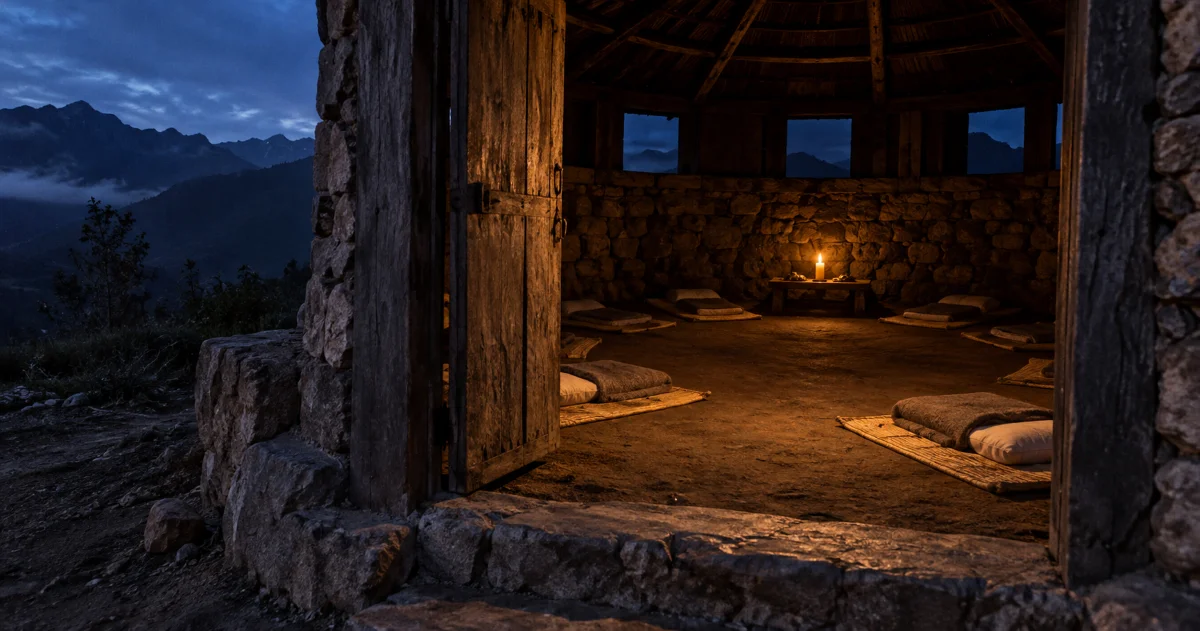
Yes, parts of it are frightening, and the honest version of that answer has numbers in it. “Is ayahuasca scary” is really 8 different fears wearing 1 word, and they do not happen at the same rate. Some are near certain. 1 is rare enough that the only published estimate puts it under 1 in 1,000. And the fear most likely to come true is the one no retreat website warns you about, which is that you will relive something specific from your own life.
I run ayahuasca retreats in Cusco. Across 9 years and roughly 2,000 guests, almost nobody arrives relaxed. Fear is the normal state of a person booking this, and it is not a reason to stay home. It is a reason to know which of your fears has evidence behind it.
Ayahuasca is scary in the sense that it is unpredictable, physically rough for most people, and emotionally direct. Vomiting is common. Frightening stretches during the night are common. Lasting harm is rare. How frightening a given ceremony turns out to be depends less on the brew than on who is in the room with you.
Is ayahuasca scary? The 8 fears, and how often each one happens
Most of the 8 have a number attached. Here they are in 1 place, which is something no other page on this topic has published.
| The fear | What the research shows | Where the number comes from |
|---|---|---|
| Reliving something from your own past | 42% of guests who had been through a difficult life event relived 1 during ceremony | Weiss 2023, 339 guests at 3 retreat centres |
| Vomiting | 62.0% reported vomiting or nausea | Global Ayahuasca Survey, 8,216 drinkers |
| A frightening stretch during the night | No prevalence figure exists. Fear during the session was the strongest predictor of every adverse state afterwards | Andion 2025, 5,400 drinkers |
| Difficult feelings in the weeks after | 55.4% reported at least 1. 12% sought professional support | Andion 2025 |
| Needing medical help on the night | 2.3% | Global Ayahuasca Survey |
| A psychotic episode | 0.052% to 0.096% of servings in 1 church’s own records | dos Santos 2017, systematic review |
| Dying | No published rate. Deaths at retreats have been reviewed case by case | See our safety post |
| Being harmed by the people running the ceremony | No published rate anywhere | Nobody has measured it |
Read the empty cells as hard as the full ones. 3 of the 8 fears have no number because nobody has collected one, and 1 of those 3 is the fear this industry least wants to discuss.
“Set and setting” is advice nobody can act on
Every page on this topic answers fear with the same 2 words, and almost none of them tells you which part of a setting matters. 1 study measured it, and the answer is the people.
In 2022, Pontual and colleagues surveyed 2,751 ayahuasca drinkers in Brazil and the Netherlands for Frontiers in Psychology. They scored the setting across several dimensions and measured challenging experiences with the Challenging Experience Questionnaire. 4 dimensions together explained 41% of the variation in those scores. The social dimension, which is how safe a person felt inside the group, was the strongest protective factor by a long way: roughly 5 times the effect of how the room was decorated. That is survey data, so read it as an association rather than a guarantee.
Set it next to what fear does. Andion and colleagues reanalysed the Global Ayahuasca Survey for PLOS Mental Health in 2025, with 5,400 respondents. Extreme fear during the ceremony was the strongest single predictor of every adverse mental state people reported afterwards, ahead of every other variable they tested.
Chain those 2 findings and the practical advice changes. Fear in the room is what predicts trouble later. The measured lever on fear in the room is the group and the people holding it. So the question to ask a retreat is not what the maloca looks like or how deep in the jungle it sits. It is how many people will be awake, and within reach of your mat, at 2am.
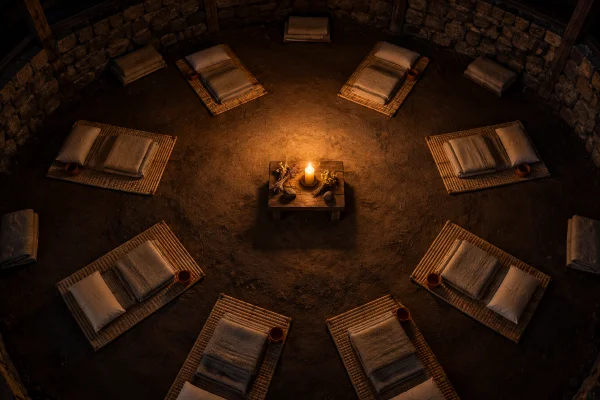
Ours, for comparison: 3 healers and 2 facilitators for a maximum of 14 guests, so roughly 1 member of staff for every 2.8 people in the room. The staffing does not change when only 4 guests book.
Will ayahuasca make you relive your trauma?
Often, yes, and this is the one fear with a real prevalence figure behind it. Roughly 2 in 5 people who have been through something difficult relive a piece of it during ceremony.
In 2023, Weiss and colleagues published the only study that has measured this, in Scientific Reports. They followed 339 guests at 3 retreat centres in Peru and Costa Rica through an average of 4.44 ceremonies. Of the non-veteran guests who had been through a difficult life event before, 42% relived at least 1 of them in ceremony. Of those who had been through something severe, 27% relived a severe one. Among veterans the figure was 59%. Among guests with a diagnosis of PTSD it was 61%, against 36% for guests without.
The gendered figures are the ones nobody quotes. Of the 121 women in the study, 88% had been through at least 1 difficult life event, and 57% relived at least 1 severe one. Among the 17% of guests who had been sexually assaulted, 33% relived it during a ceremony.
Those numbers only mean something with their conditions attached. Each one is a share of the people who had already been through that kind of event, not a share of everybody who drinks.
What the same study found next matters as much. Reliving an event was linked to discomfort during ceremonies, and also to bigger drops in trait neuroticism afterwards. Distress and benefit showed up in the same people. Nobody should book a retreat expecting a gentle evening with their own history, and nobody should read “I will relive it” as “I will be damaged by it.”
This is also why our intake call asks a question most centres skip: tell me about the worst psychological experience you have ever had, and what helped you come out of it. The answer tells us more about readiness than any diagnosis on a form.
The bad trip, and what the phrase hides
“Bad trip” bundles 2 very different things: a difficult stretch inside a ceremony, which is common, and lasting harm, which is not.
A hard hour or 2 is ordinary here. It usually arrives as fear with nothing attached to it, a pounding heart, and a strong conviction that the night will never end. I spent 2 hours of my own first ceremony in 2014 convinced I was dying, in a rented farmhouse with nobody checking on me. What a frightening night feels like is covered properly in its own piece, and so is how long it lasts, which is the question most people in the middle of it want answered.
Frightening imagery is a separate thing again, and more often strange than hostile. We have written about what the visions mean and how little the scary ones predict about the rest of the week.
Losing control, and the part the research does not settle
You do lose a measure of control, and that is the mechanism rather than a malfunction. What the research cannot tell you is how long the loss lasts, because nobody has timed it.
The clinical name for the far end of this is ego dissolution, and it has been measured with validated scales. The frightened version of it predicts worse outcomes than the open version. We have put the full set of findings, including what was still measurable 4 weeks later, in our piece on losing the sense of self.
Worth saying plainly: nobody in 9 years here has failed to come back.
Will you vomit in front of everyone?
Probably. In the Global Ayahuasca Survey of 8,216 drinkers, 62.0% reported vomiting or nausea, and it is treated as part of the work rather than a side effect.
The social part of this fear dissolves faster than people expect, because everybody in the room is in the same position and a facilitator replaces your bucket without a word. By the third ceremony somebody usually purges, somebody laughs, and the whole room goes with them. The purge, start to finish covers the timing and what to do about it.
Can ayahuasca make you go insane?
Rarely, and there is a published figure. A 2017 systematic review in Therapeutic Advances in Psychopharmacology collected every documented case it could find and put the rate at under 1 in 1,000 servings.
The detail matters. Dos Santos, Bouso and Hallak reviewed the records of the União do Vegetal, a Brazilian ayahuasca church with decades of its own data. 1 estimate in that review counted 13 to 24 possible cases across about 25,000 servings, which works out at 0.052% to 0.096%. A second source in the same review put the denominator at 250,000 servings, which drops the rate by a factor of 10. Neither source explains how it reached its total, so treat the lower end as soft.
The review’s conclusion is firmer than its arithmetic. Episodes were rare, and they clustered in people with a personal or family history of psychotic illness or mania, in unsupervised settings, and alongside other drug use. The authors tell anyone with a personal or family history of schizophrenia, psychotic depression or mania to avoid it.
That is exactly what screening is for, and it is the reason 13% of people who apply to us are turned down. Dr. Medina reads every application before anyone pays anything, and who we turn away sets out the full list, including first-degree family psychiatric history, which we added after a guest had an acute psychotic episode here in November 2022.
Dying, and what has killed people at retreats
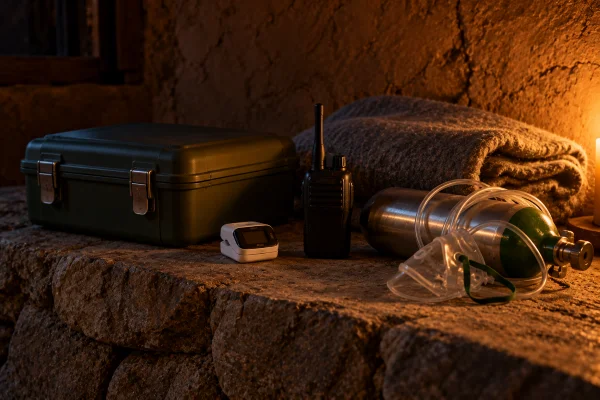
Deaths at ayahuasca retreats are rare, and the reviewed cases point at the same handful of causes rather than at the brew by itself: undisclosed heart conditions, drug interactions, other substances added to the mix, and the absence of anyone qualified to notice a medical emergency.
None of those is random. Every one of them is a screening failure or a staffing failure, which means every one of them is a question you can ask a retreat before you book.
Nothing happening is the most common first night
The quietest outcome is also the most common one, and it frightens people more than they admit.
Our first-night doses are kept low on purpose. Some guests feel almost nothing, decide the trip was a waste of money on day 4, and then have the hardest night of the week on day 9. Don Julio’s line for it is that the vine walks through the house and rearranges the furniture so quietly you do not notice until morning.
The fear nobody puts on the list
The fear that belongs at the top of the list is the one no page in this field names: being harmed by the people running the ceremony. There is no published rate for it, because nobody has collected one.
This industry has a sexual abuse problem. Guests are in the most vulnerable state a person can be in, and some facilitators and healers have used that. It gets avoided in public because admitting it means admitting that tradition does not automatically come with ethics, and that structural safeguards are not optional.
Our answer to it is written down rather than implied. No staff member may have romantic or sexual contact with a guest during a retreat or in the 90 days after it, every staff member signs that in writing, and a violation ends the job that day. Nobody is touched in ceremony without spoken consent asked for again each time, including a hand on the shoulder. There are 2 independent reporting channels, and if a complaint involves either of the people running them, guests can go straight to Dr. Medina, whose contact details are in the welcome packet for exactly that reason. All of it is handed to guests in writing on arrival day, not buried on a website.
2 women are in the ceremony space at every single ceremony. That is deliberate. Given what the Weiss figures say about how often women relive a severe event, a room with no women holding it is not a neutral choice.
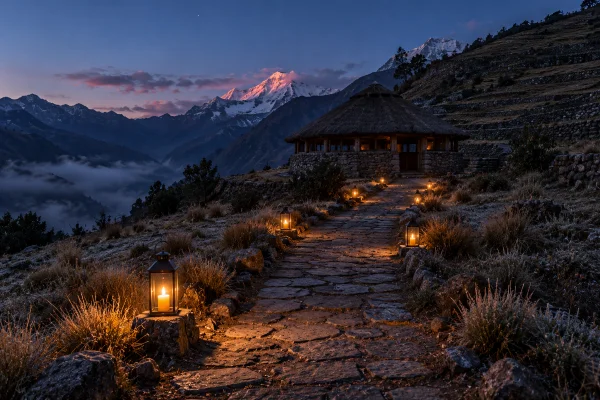
You can see the people in the room before you decide anything. If a retreat cannot tell you who will be there at 2am, who trained them and who they answer to, that is your answer.
What to do with the fear in the week before you fly in 2026
Say it out loud to someone, and do not treat it as a sign you have made a mistake.
David Ashworth runs integration here, and he has had this conversation several hundred times. What he tells people is this: your fear is intelligent. You are about to do something that asks you to give up control, in the dark, at altitude, in a foreign country, in a process you do not fully understand. Any rational person would be nervous. The fear does not mean you should not come. It means you are taking it seriously.
The second half of what he says is the part that does the work, and it is the same thing the Pontual data found: you will not be alone. At every moment of every ceremony, someone is within arm’s reach.
2 more things worth knowing before you fly. Our lead healer has declined to serve a guest on their first night 3 times in 9 years, after reading them in person. 2 of those 3 drank on a later night and had a strong week. And twice in 9 years a guest has concealed something on their intake form, which is the one thing that turns a manageable night into a dangerous one.
If you are scared, that is the normal starting point, not a disqualification. Read about the days after before you decide, because the week home is the part people underestimate. Then start your application, and Dr. Medina will read your history before you pay anything. Is ayahuasca scary? It is, and so is the version of your life that made you look it up.
Frequently asked questions
Is ayahuasca scary?
Parts of it are. Vomiting is reported by 62.0% of drinkers in the largest survey, and frightening stretches during a ceremony are common. Lasting harm is rare: 2.3% of that same survey of 8,216 people needed medical attention. How frightening a given night gets depends heavily on who is in the room with you.
Is ayahuasca scary for first-timers?
Usually more frightening in the week before than on the night itself. First-night doses at a careful centre are kept low, and the most common first-ceremony outcome is a quiet, mostly physical night. The emotional weight tends to arrive on the third or fourth ceremony, not the first.
Can you have a bad trip on ayahuasca?
Yes, if you mean a difficult stretch inside the ceremony. Those are common and usually pass within an hour or 2. If you mean lasting harm, that is rare. In a 2025 reanalysis of the Global Ayahuasca Survey, 55.4% of 5,400 people reported some difficult mental effect in the weeks after, and 12% looked for professional support.
Will ayahuasca bring up my trauma?
Often. In a 2023 study of 339 guests at 3 retreat centres, 42% of those who had been through a difficult life event relived at least 1 during ceremony, and 27% of those who had been through something severe relived a severe one. The same study found that the people who relived an event reported more discomfort and bigger drops in trait neuroticism afterwards.
Can ayahuasca cause psychosis?
It is rare. A 2017 systematic review put the rate at 0.052% to 0.096% of servings in 1 church’s records, which is under 1 in 1,000. The cases clustered in people with a personal or family history of psychotic illness or mania, in unsupervised settings. Anyone with that history should not drink it, which is what medical screening exists to catch.
How do I stop being scared before my ayahuasca ceremony?
You do not, and trying to is the wrong target. Tell a facilitator, your screening call or another guest, because fear kept inside your head is the kind that does damage. Then ask the practical question: how many staff will be awake and within reach of your mat at 2am. The research on settings says that is the part that matters.