What To Expect At A San Pedro Ceremony, Hour By Hour
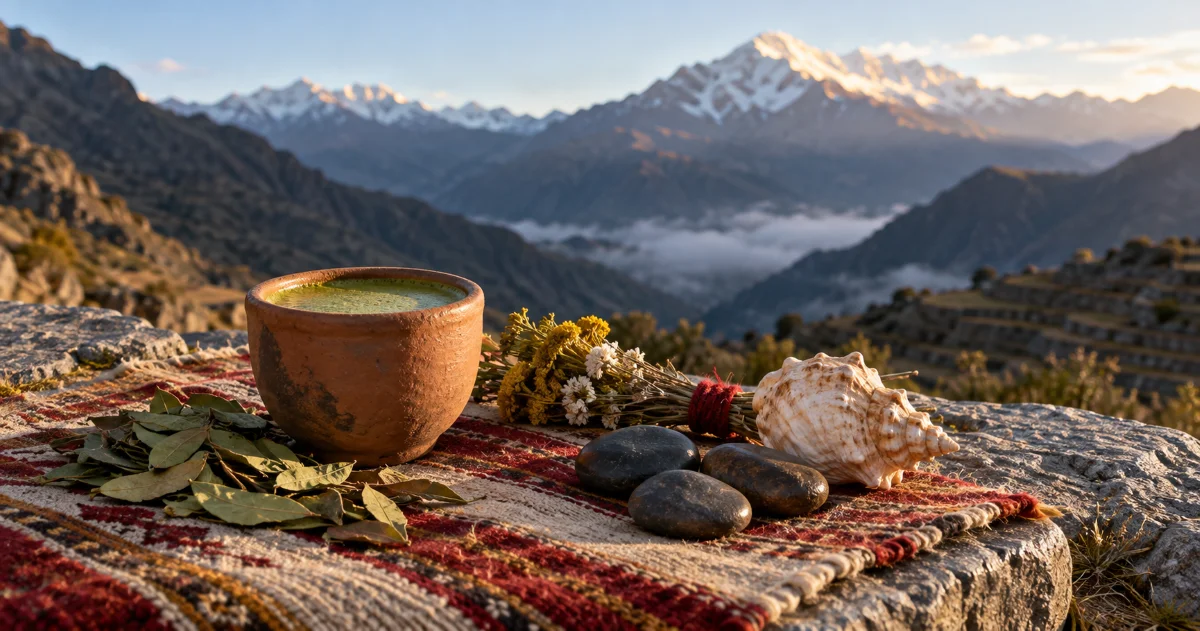
Around Cusco, a San Pedro ceremony means drinking a thick, bitter cactus brew in the morning and staying under it for most of the day. The peak tends to land 3 to 4 hours after the cup, and the whole day can run 10 to 14 hours. That’s what to expect at a San Pedro ceremony. It lasts longer than the 6 to 10 hours some sales pages quote, and it’s harder on your heart than the word “gentle” suggests.
We run an ayahuasca retreat near Cusco and don’t serve San Pedro, so nothing here is selling you a cup. The cactus grows on our terraces, and our lead healer won’t pour it. This guide draws on Peru’s heritage decree, 4 peer-reviewed studies and 9 years of watching altitude hit guests who arrive too fast
What to expect at a San Pedro ceremony, hour by hour
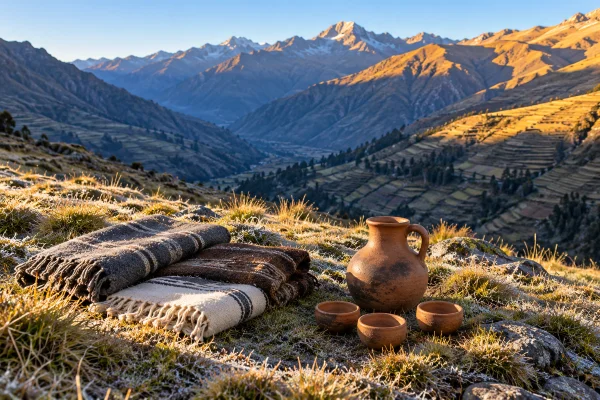
The day starts with prayers and a cup at about 7:00 am, peaks between late morning and midday, and eases off toward evening.
A San Pedro ceremony is a guided ritual in which people drink a boiled brew of the San Pedro cactus, Echinopsis pachanoi, whose active compound is mescaline. A healer, often called a huachumero, leads the prayers and sets each person’s dose. In a 2022 survey, 60% of 218 San Pedro users reported 11 hours or more.
| Clock, cup at 7:00 am | What operators describe | What the 2024 trial measured |
|---|---|---|
| About 7:00 am | Prayers, often to Pachamama and the apus, then the cup | Dose taken |
| 7:00 to 9:00 am | A quiet wait under blankets. Operators give 40 minutes to 2 hours for onset | Blood levels peak about 2 hours after the dose |
| 10:15 to 11:00 am | The strongest stretch. One operator puts the emotional peak at midday | Effects peak 3.2 to 4.0 hours after the dose |
| About 1:30 pm | Fruit around lunchtime, and walking is common | At 100 mg, effects last 6.4 hours on average |
| About 5:45 pm | A closing circle, where people share if they want to | At 400 mg, effects last 10.7 hours on average |
| About 9:00 pm | Closed. One operator says most people feel clear-headed by sunset | At 800 mg, effects last about 14 hours |
The middle column comes from operators’ published accounts, the right-hand one from a 2024 controlled trial in Translational Psychiatry that gave 16 healthy volunteers pure mescaline. A cactus brew isn’t a lab dose, so treat the times as a rough guide.
Sellers describe the peak as more emotional than visual. If visions are what you’re after, read what visions predict before you choose either medicine.
How long does a San Pedro ceremony last?
Plan on 10 to 14 hours before you feel like yourself again, and keep the evening free. The range is wide because the dose in a cup of cactus isn’t fixed.
A 2022 survey of 452 mescaline users in the Journal of Psychopharmacology asked about each person’s most memorable experience. For the 218 San Pedro users, 30% put it at 11 to 13 hours, and another 30% at more than 13. In the 2024 trial, effects lasted 6.4 hours at 100 mg and about 14 hours at 800 mg.
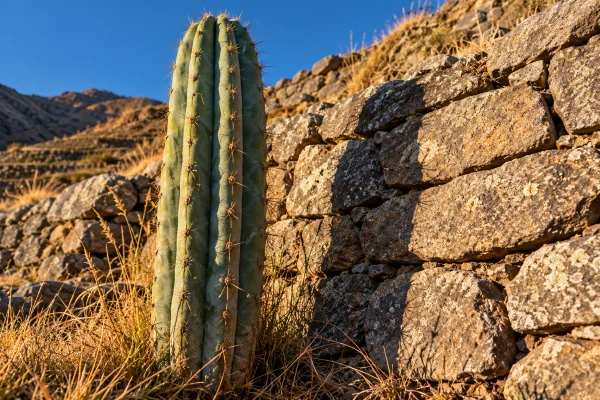
Nobody pours milligrams, though. A 2010 study in the Journal of Ethnopharmacology found mescaline from 0.54% to 4.7% of dry weight across 5 samples of Echinopsis pachanoi, a nearly 9-fold spread within 1 species. So 2 cups the same size can hold doses far apart, and a second cup adds to whatever the first held.
A full San Pedro day runs 2 to 3 times how long ayahuasca lasts, which is 4 to 6 hours.
How common is purging on San Pedro?
It tracks dose. In the 2024 trial, 2 of 16 volunteers vomited at 400 mg of mescaline, and 7 of 16 at 800 mg.
One operator tells guests about 1 in 8 people purge on its ceremony days, the same rate the trial found at 400 mg. At 800 mg, the trial’s rate was close to half.
Operators ask for a light meal the night before, and one skips breakfast, saying a full stomach raises the odds of nausea. On the day, you control the second cup. It adds dose, and vomiting rose with dose in the trial. You can ask for a smaller first cup, and you can turn down the second.
5 kinds of San Pedro ceremony, and when each runs
Most San Pedro ceremonies sold to visitors around Cusco run by day. Elsewhere the form changes: the northern healing mesa runs all night, and a vision quest can last a week.
| Format | Time of day | Length | What you do | Where you’ll find it |
|---|---|---|---|---|
| Northern healing mesa | Night | About 10 pm to 4 am in a 1972 record | Prayers, then diagnosis and treatment at the healer’s altar | Northern Peru, including the Las Huaringas lagoons |
| Daytime ceremony | Morning to evening | 10 to 14 hours | Lying down, then sitting or walking outdoors | Cusco and the Sacred Valley |
| Power walk or pilgrimage | Daytime | Set by the route | Walking to an Inca site or a sacred mountain | The Andes, including the Cusco area |
| Wachumayu | Dusk to dawn, around a solstice | About 10 hours of dancing | Dancing in 1 direction around a fire | High Andes, about 4,000 meters |
| Vision quest | Days | 7 days or more, with the cup on day 4 | Alone in nature, fasting, with no food or water | Paths such as the Red Road, which has North American roots |
The last 2 rows come from a participant’s published account, and no study covers them. Ranked by risk, I’d put the vision quest first: days of fasting without water, then a liter of cactus.
The traditional healing form on record runs at night. Peru’s 2019 UNESCO Tentative List entry for the Las Huaringas lagoons calls the mesada “the nocturnal rite”. Douglas Sharon’s 1972 study of Peruvian folk healing puts the session at about 10 pm to 4 am.
A dancing night at 4,000 meters and a quiet day on a terrace at 2,900 aren’t the same risk. Ask which one you’re buying.
The tradition Peru protected isn’t the one sold in Cusco
Peru’s heritage protection for San Pedro covers healing in northern Peru. It doesn’t extend to the daytime ceremonies sold around Cusco.
The protection comes from the 2022 declaration, Resolución Viceministerial N° 000252-2022-VMPCIC/MC, published in El Peruano, Peru’s official gazette. Article 1 declares the “usos tradicionales del cactus San Pedro en las prácticas del curanderismo en el norte del Perú” national heritage: the traditional uses of San Pedro in the healing practices of northern Peru. Article 4 sends the resolution to the regional culture offices of Lambayeque, La Libertad, Piura, Tumbes, Cajamarca, Amazonas and Áncash. Cusco’s office isn’t on the list.
The decree also draws a line that should worry anyone selling San Pedro to tourists. It says traditional use is distinct from addiction, recreational use or “turismo místico”, mystical tourism.
The northern preparation looks nothing like a Cusco booking page. The decree describes a patient’s preparation that can last weeks to months, with a restricted diet, sexual abstinence, discipline over emotions and cleansing baths in lagoons near sacred sites. The Cusco-area sales pages I read ask for 48 hours without alcohol, or “a few days” off meat and alcohol.
A Cusco ceremony can still be sincere and well run. What a seller has no grounds to claim is that their day is Peru’s protected tradition. Ask which tradition your huachumero trained in, where, and with whom.
What Cusco’s altitude does to a long San Pedro day
Altitude and mescaline both push your heart harder, and a San Pedro day stacks them for 10 hours or more. Cusco sits at about 3,350 meters, and our Sacred Valley terraces at about 2,900.
In the 2024 trial, blood pressure rose at every dose above 100 mg, heart rate climbed with dose, and body temperature rose from 200 mg up. Those were healthy volunteers in a clinical setting. Altitude, or a format built on dancing or long walks, asks more of your heart.
The CDC’s guidance for your first 48 hours at altitude is only mild exercise and no alcohol. It also notes that travelers to Cusco can sleep lower than the airport for 1 to 2 nights before going up.
We learned this with ayahuasca. In our first year, 3 guests developed moderate altitude sickness during retreats. In 2018 we added 2 full acclimatization days before the first ceremony. Across roughly 2,000 guests in 9 years, we’ve still needed supplemental oxygen 10 to 12 times during acclimatization. Since a 2022 cardiac event compounded by altitude, every guest over 45 gets an ECG as part of screening.
The most common mistake we see is flying into Cusco on the morning a retreat starts. If you’re flying in from Lima, arrive a day early and sleep lower in the valley first. Give a San Pedro day the same 48 hours.
Who shouldn’t drink San Pedro?
Skip it, or get a physician’s written clearance first, if you have heart disease or high blood pressure that isn’t under control. The same goes for a history of psychosis or bipolar disorder, and for anyone on psychiatric medication.
Altitude adds to that list. The CDC’s altitude table names unstable angina, decompensated heart failure, severe COPD, and a heart attack or stroke in the 90 days before going up as contraindications. It puts poorly controlled hypertension and poorly controlled arrhythmias under “caution required.”
Our physician holds the same lines for ayahuasca: uncontrolled cardiac conditions, uncontrolled hypertension, psychosis history and bipolar I are automatic no’s. A 10-hour mescaline day at altitude gives no reason to relax them.
The medication question has no good answer yet. A 2024 systematic review of psychedelic drug interactions in the Journal of Psychopharmacology found 52 studies. Only 4 involved mescaline, and none tested it with an SSRI, an MAOI or lithium. Don’t take anyone’s word on those mixes, including ours. Ask your own prescriber, and treat a huachumero who waves them through as a warning sign.
We’ve set out what screening each requires, San Pedro and ayahuasca, side by side.
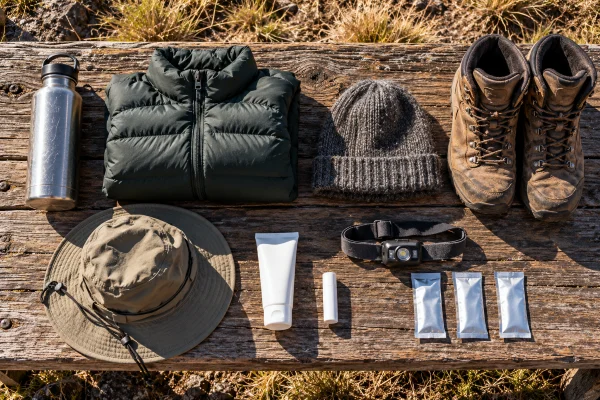
What to bring to a San Pedro ceremony in 2026
Pack for a cold start and a strong midday sun. In the dry season, May to October, nights on our terraces fall to between 0 and 10°C, and a 7:00 am cup comes before the day warms up.
- A down jacket, thermal layers, a warm hat and spare wool socks
- Sunscreen and a wide-brim hat, because UV at altitude burns even on cloudy days
- Lip balm for the dry air
- Boots that grip on stone and wet grass
- At least 1 liter of water, plus electrolyte sachets
- A headlamp, in case your day runs past dark
Ask about water before you book. Sellers split 3 ways: one account says participants go without until a water prayer at the end, one operator serves water and tea all day, and another says bring your own. Mescaline raised body temperature in the 2024 trial, so get a clear answer and run it past your doctor.
How to vet a huachumero before you drink
Ask 6 questions before you pay. Good answers come with names and numbers.
- Who leads the day, and where and with whom did they train?
- Where was the cactus cut, and how do you set each person’s dose?
- Is there a second cup, and can I refuse it?
- Can I drink water during the ceremony?
- Who has first-aid training, and how far is the nearest clinic?
- What happens if someone is still altered at dusk?
If the first 2 answers come back vague, keep looking.
Guests ask why we don’t pour San Pedro when it grows on our terraces. Don Julio Quispe Condori, our lead healer and co-founder, has held the same line for 9 years: “Each medicine has a spirit. Each spirit has a way of working. San Pedro is the medicine of the sun and the mountains. Ayahuasca is the medicine of the jungle and the night. They are both powerful teachers. But you do not study two languages in the same classroom at the same time.”
That’s what to expect at a San Pedro ceremony: a long, physical day whose strength depends on the cactus in the pot. If ayahuasca is the better fit for you, apply for screening and our physician reads your file first.
Frequently asked questions
What should you expect at a San Pedro ceremony?
Expect a morning cup of bitter cactus brew, a quiet wait while the effects come on, a peak about 3 to 4 hours in, and a long taper into the evening. In a 2022 survey, 60% of 218 San Pedro users reported 11 hours or more. Around Cusco, most ceremonies run outdoors by day, led by a huachumero.
How long does a San Pedro ceremony last?
Plan on 10 to 14 hours. In a 2024 controlled trial, mescaline’s effects lasted 6.4 hours on average at 100 mg and about 14 hours at 800 mg. The dose in a cup varies because mescaline ran from 0.54% to 4.7% of dry weight across 5 samples of the same cactus species.
Will I throw up at a San Pedro ceremony?
Maybe, and the odds rise with dose. In a 2024 trial, 2 of 16 volunteers vomited at 400 mg of mescaline and 7 of 16 at 800 mg. Turning down a second cup keeps your dose, and your odds, lower.
What should you expect at a San Pedro ceremony at Cusco’s altitude?
Expect a harder day if you haven’t acclimatized. Cusco sits at about 3,350 meters, and the CDC advises only mild exercise and no alcohol for your first 48 hours at altitude. In a 2024 trial, mescaline raised blood pressure at every dose above 100 mg, so give yourself at least those 48 hours before you drink.
Is San Pedro protected cultural heritage in Peru?
Yes, in one tradition. A 2022 resolution from Peru’s Ministry of Culture declared the traditional knowledge and uses of San Pedro in the curanderismo of northern Peru national cultural heritage. It was sent to 7 northern regional culture offices, and Cusco’s isn’t among them.
Can you drink San Pedro if you take antidepressants?
Not without your prescriber’s input. A 2024 systematic review found 52 studies of drug interactions with classic psychedelics, and only 4 involved mescaline. None tested it with SSRIs, MAOIs or lithium, so there’s no data to go on.
Does Cusco Ayahuasca Retreats offer San Pedro ceremonies?
No. San Pedro grows on our terraces at 2,900 meters, and in 9 years we have never served it. Don Julio Quispe Condori, our lead healer and co-founder, keeps our ceremonies to ayahuasca.